


From Our Foreign Correspondent
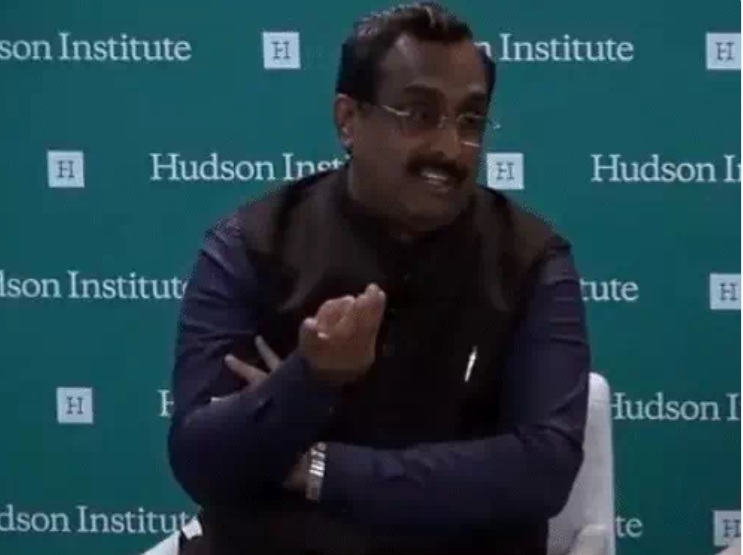
Ram Madhav, the RSS’s star think-tank and serial controversy generator, has once again gifted the BJP and Sangh Parivar a fresh headache. At the Hudson Institute in Washington DC, this self-anointed guardian of Indian nationalism openly boasted that the Modi government had meekly surrendered to Trump administration demands: stopping oil purchases from Iran and Russia, and quietly accepting a punishing 50% tariff without much protest.
“We stopped buying oil from Iran. We stopped buying oil from Russia… We agreed to a 50% tariff without saying too much,” Madhav declared, framing these moves as proof that India had done “enough” to please Washington. The message was unmistakable: when America pressures, New Delhi bends — and does so with minimal fuss.
Coming from a senior RSS leader, the statement landed like a guided missile aimed at the Modi government’s carefully cultivated image of unyielding strength. For years the Sangh ecosystem has projected Narendra Modi as the epitome of muscular nationalism — the man with the legendary 56-inch chest that brooks no foreign bullying and leads a resurgent Vishwaguru. Yet here was one of their own senior voices casually admitting that on critical issues of energy security and trade, India had simply fallen in line.
The opposition could barely contain its glee. Congress leaders and allies immediately seized on the remarks as smoking-gun evidence that the Modi regime had compromised India’s sovereign interests and energy needs to appease Donald Trump. Russian oil, which continues to provide India with much-needed discounted crude amid global turmoil, was suddenly being presented as a concession extracted by Washington. The 50% tariff, later negotiated down in an interim deal, was portrayed not as tough bargaining but as quiet submission.
Predictably, the backlash triggered the standard damage-control drill. Within hours Madhav issued a crisp retraction on X: his earlier statement was “factually incorrect.” India had never agreed to stop Russian oil imports under pressure, he clarified, and had in fact “vigorously protested” the steep tariff. What began as a boast about accommodation ended as a hurried claim that no real concession had occurred. The apology arrived with impressive speed — faster, some noted, than the government’s response to actual policy challenges.
This episode is hardly an isolated lapse. Ram Madhav has a documented talent for placing both the BJP and RSS on the defensive. Late former Jammu & Kashmir Governor Satyapal Malik had publicly accused him of advocating for specific business houses and pushing clearance for high-value contracts linked to major corporates. Madhav denied the charges and issued legal notices, yet the episode added to the whispers that this ideological heavyweight sometimes operates with one foot in pragmatism and another in patronage networks.
Even more telling are the moments when Madhav has been seen dodging pointed questions from journalists like Pieter Friedrich on RSS activities and influence operations abroad. Quick retreats from uncomfortable microphones do little to reinforce the fearless nationalist image the Sangh seeks to project.
At its core, the real saffron dilemma lies exposed in such episodes. The RSS and BJP position themselves as the uncompromising custodians of cultural and strategic sovereignty — champions of atmanirbharta who reject any hint of external dictation. Yet a key ideological figure travels to the heart of the American policy establishment and ends up spotlighting precisely the kind of pragmatic compromises critics have long alleged. One moment Madhav boasts of quiet compliance; the next he scrambles to deny it ever happened that way.
The 56-inch chest narrative takes another hit when senior leaders inadvertently reveal the gap between domestic chest-thumping and the realities of great-power diplomacy. Tariffs sting exporters, discounted Russian oil serves national interest, and balancing relations with Washington is standard statecraft — none of it inherently shameful. What turns routine diplomacy into farce is the pattern: project invincible strength at home, list concessions as achievements abroad, then issue swift apologies when the remarks boomerang.
For a dispensation that never tires of muscular rhetoric, these own-goals from within are particularly damaging. Modi has centralised power and cultivated an aura of dominance, yet he must repeatedly manage loose cannons who weaken the very image they claim to defend. Self-appointed nationalist leaders like Madhav create the genuine headache for the saffron brigade: they talk tough at home but occasionally expose the flexible spine when performing on the global stage.
In the end, Ram Madhav’s Hudson Institute moment offers a masterclass in satirical tragedy. A senior RSS leader tried to showcase India’s cooperative spirit and instead handed the opposition a ready-made clip of “surrender.” The swift sorry followed, but the contradiction lingers: if India truly stands tall with a 56-inch chest, why does one of its ideological guardians feel the need to boast about bending — only to deny it moments later?
The saffron project’s greatest challenge remains internal consistency. Until then, expect more such episodes where projected sovereignty meets Washington reality, followed by the inevitable rapid retreat. The chest may measure 56 inches on posters, but in practice it sometimes appears far more accommodating.
