

Trump and Netanyahu’s Maverick Warmongering: The Reckless Duo Dragging the World into Catastrophe

By Suresh Unnithan & Nanditha Subhadra
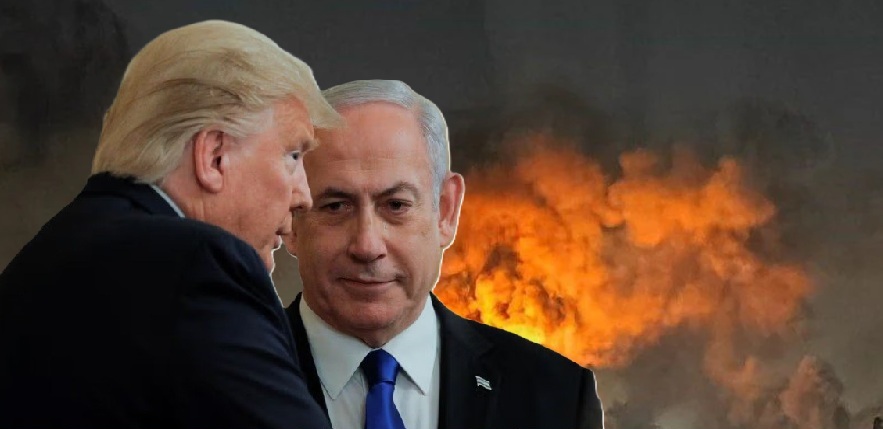
US President Donald Trump and Israeli Prime Minister Benjamin Netanyahu launched a unilateral war against Iran on February 28, 2026, in a display of thoughtless adventurism that has pushed the entire planet into a devastating energy and economic crisis. Trump’s impulsive warmongering, fuelled by crude resource ambitions and shifting pretexts, triggered the worst oil supply disruption in decades—worse in scale than the 1973 Arab oil embargo or the 1979 Iranian Revolution shocks. Netanyahu’s refusal to set any timeline for ending the conflict has only prolonged the agony. Their joint aggression has isolated them internationally, fractured domestic support—even within Trump’s own Republican Party—and inflicted needless suffering on millions worldwide.
Trump’s own words have exposed the true drivers behind this disaster. He has openly threatened to “obliterate” Iran’s electric generating plants, oil wells, and Kharg Island—the terminal handling nearly 90% of Iran’s exports—while repeatedly signalling America’s interest in “taking the oil in Iran.” The strikes, initiated while nuclear negotiations were still active, killed Supreme Leader Ali Khamenei early on and escalated into widespread bombardment. Iran responded by disrupting the Strait of Hormuz, the chokepoint for roughly one-fifth of global oil and LNG trade. This move has created a supply shock far exceeding the 1973 embargo, which removed about 4.5 million barrels per day and quadrupled prices, or the 1979 crisis that doubled them amid revolution and led to gas lines, stagflation, and recessions across the West. Today, with up to 20 million barrels daily at risk, the International Energy Agency has warned of a “major, major threat” to the global economy.
The human cost is already staggering and blood-stained on their hands. Iranian reports indicate nearly 2,000 deaths, including hundreds of civilians—women and children among them—with over 24,000 injured. Strikes on schools, hospitals, universities, and cultural sites have provoked global condemnation, including one assault on a girls’ elementary school in Minab that claimed around 175 young lives. Blackouts, water shortages, and infrastructure collapse have displaced millions inside Iran. Retaliatory strikes have hit civilian areas in Israel and energy targets in the Gulf. As the war enters its second month, Trump’s mixed threats and Netanyahu’s insistence that the conflict is “beyond the halfway point” in missions—but with no schedule—signal a dangerous open-ended quagmire with no coherent exit plan.
Economically, the pair’s thoughtless aggression has delivered punishing blows. Brent crude, around $72 per barrel before the strikes, has surged dramatically, reaching peaks above $114 and trading near $106–$110 as of late March 2026 amid ongoing volatility. West Texas Intermediate has climbed above $100, with analysts fearing further spikes to $150 or higher if the Hormuz disruption persists. This echoes the 1970s oil crises that reshaped global economies through inflation, recession, and energy rationing—but today’s interconnected world amplifies the damage. Qatar declared force majeure on LNG exports, gasoline and heating costs have soared, and supply chains are buckling.
Stock markets have reeled in response. Since the war began, the S&P 500 has dropped nearly 9% from its January high, suffering its longest streak of consecutive losing weeks in roughly four years and flirting with correction territory. The Dow Jones Industrial Average has fallen over 10% from recent peaks, shedding thousands of points and recently closing near 45,960 after sharp daily drops. The Nasdaq has sunk more than 10% below its record, entering full correction. Global indices have followed suit as investors price in stagflation risks—slow growth paired with rising prices.
The OECD has slashed its 2026 global GDP growth forecast to around 2.9%, while projecting G20 inflation 1.2 points higher at 4.0%. In the United States, headline inflation could hit 4.2%. Europe faces renewed recession risks in energy-heavy economies like Germany. Developing nations, including India (importing 85% of its oil via vulnerable Gulf routes), grapple with widening deficits, currency weakness, and food price spikes as fertilizer costs rise 30% or more. In regions like Kerala, disruptions to Gulf remittances compound energy poverty for ordinary families.
Social and political backlash has erupted directly against the two leaders. In the United States, millions have joined “No Kings” protests denouncing Trump’s war as reckless and economically ruinous. Cracks have widened within the Republican coalition: while core supporters remain loyal, significant numbers of Republicans express serious doubts, with some joining demonstrations or publicly criticizing the escalation, rising fuel prices, and lack of congressional authorization. This internal fracturing raises concerns about midterm repercussions. In Israel, anti-war protests have grown in cities like Tel Aviv and Haifa, with demonstrators clashing with police and accusing Netanyahu of prolonging the conflict for political survival. Arrests have followed, but public fatigue is mounting despite initial security concerns.
Internationally, Trump and Netanyahu find themselves increasingly isolated. The absence of a broad coalition, UN criticism of civilian casualties, and allied skepticism highlight the unilateral hubris of their campaign. Trump’s narrative shifts—from nuclear prevention to regime change to oil interests—have eroded any remaining credibility.
This maverick warmongering is not bold leadership; it is catastrophic folly. The 1970s oil shocks taught harsh lessons about energy vulnerability and economic pain; Trump and Netanyahu have chosen to repeat and amplify them in a far more fragile global context. Families in Iran mourn lost children, commuters worldwide face soaring pump prices, farmers battle fertilizer shortages threatening food security, and investors watch portfolios shrink.
History will hold these two men accountable for dragging the world into this preventable disaster through thoughtless aggression and resource-driven impulses. Urgent de-escalation, genuine multilateral diplomacy, and restraint are the only ways to mitigate further damage. Without immediate course correction, Trump and Netanyahu’s legacy will be defined by the global energy crisis, economic wreckage, and human suffering they alone initiated.
