

Trump Reinstates Naval Blockade on Iranian Shipping in Strait of Hormuz Amid Escalating Strikes

Dubai: The United States launched strikes on Iran for the third consecutive night, escalating hostilities in the region. US Central Command (CENTCOM) reported targeting areas around Abu Musa, Bandar Abbas, Bushehr, Chahbahar, Jask, and Konarak, focusing on Iranian coastal defense systems, missile and drone sites, and maritime capabilities. Iran acknowledged the strikes but reported no immediate casualties or significant damage. CENTCOM stated that the operations would continue to impose a heavy cost on Iranian forces and degrade their ability to threaten innocent civilians and commercial shipping in the Strait of Hormuz.
In response, Iran targeted Bahrain, Jordan, and two tankers linked to the United Arab Emirates in the strait. The attacks killed one mariner — an Indian national — and injured eight others (six Indians and two Ukrainians), according to the Emirati Defence Ministry. Jordan’s military intercepted four Iranian missiles.
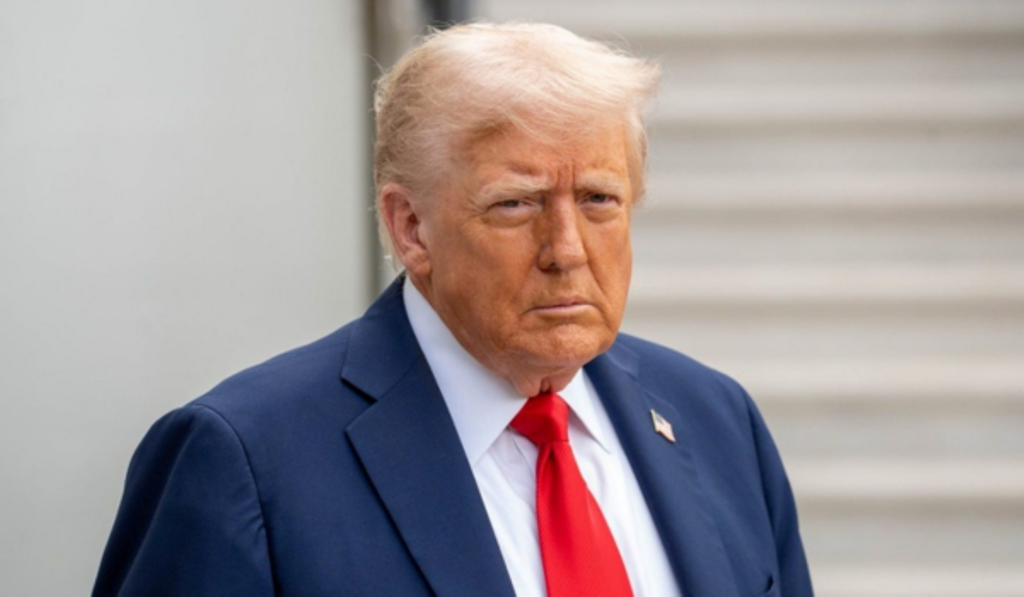
US President Donald Trump threatened to destroy Pickaxe Mountain, a deeply buried nuclear site near Natanz suspected by Western intelligence of housing an undeclared enrichment facility.
Blockade Announcement
Earlier on Monday, President Trump announced the reinstatement of a US naval blockade on Iranian shipping in the Strait of Hormuz, effective from 4 p.m. ET (20:00 GMT) on Tuesday. In a Truth Social post, he declared: “The Hormuz Strait is OPEN, and will remain OPEN, with or without Iran. We are reinstating THE IRANIAN BLOCKADE,” specifying that it would target only Iranian ships and vessels trading with Iran. Other commercial traffic would continue to enjoy free passage.
Trump further stated that the US would impose a 20% charge on cargo transiting the strategic waterway to cover the costs of providing maritime security, positioning the United States as the “Guardian of the Hormuz Strait.” He called on Gulf states including Saudi Arabia, UAE, Qatar, Bahrain, and Kuwait to contribute toward these security costs.
Iran rejected the US moves, asserting its authority over the strait. According to Iranian state media, Brigadier General Ebrahim Zolfaghari, spokesperson for Central Headquarters, declared that Iran would not allow US interference in the management of the Strait of Hormuz under any circumstances. He warned that any regional country providing logistical support to US forces would be considered as committing an act of war against Iran.
Economic Impact
The renewed tensions and blockade announcement have triggered sharp market reactions. Global oil prices surged more than 9% — Brent crude recording its biggest daily gain since 2020 — on fears of disruptions to the Strait of Hormuz, a critical chokepoint carrying about 20% of the world’s seaborne oil trade and significant volumes of liquefied natural gas.
Asian markets opened volatile, with initial declines before partial recovery, while US futures showed modest gains amid uncertainty. The developments threaten broader economic ripple effects, including higher fuel prices for consumers and industries worldwide, potential supply chain disruptions for energy-dependent economies like India (a major importer via the strait), and increased costs for global shipping and insurance. Analysts warn of inflationary pressures and impacts on emerging markets if the situation prolongs.
