

Trump’s Duplicitous “India is My Friend” Lies Exposed in Hormuz Bloodbath: Urgent Call for Strategic Autonomy

By Suresh Unnithan
In the treacherous waters near the Strait of Hormuz, the deaths of three Indian seafarers aboard the Palau-flagged MT Settebello have laid bare the glaring contradictions in President Donald Trump’s repeated claims of friendship with India. The US Navy’s strike on the commercial tanker carrying 24 Indian crew members killed Aditya Sharma, Shivanand Chaurasiya, and Patnala Suresh. Washington justified it as enforcement of its aggressive blockade on Iranian oil, citing the vessel’s alleged non-compliance.
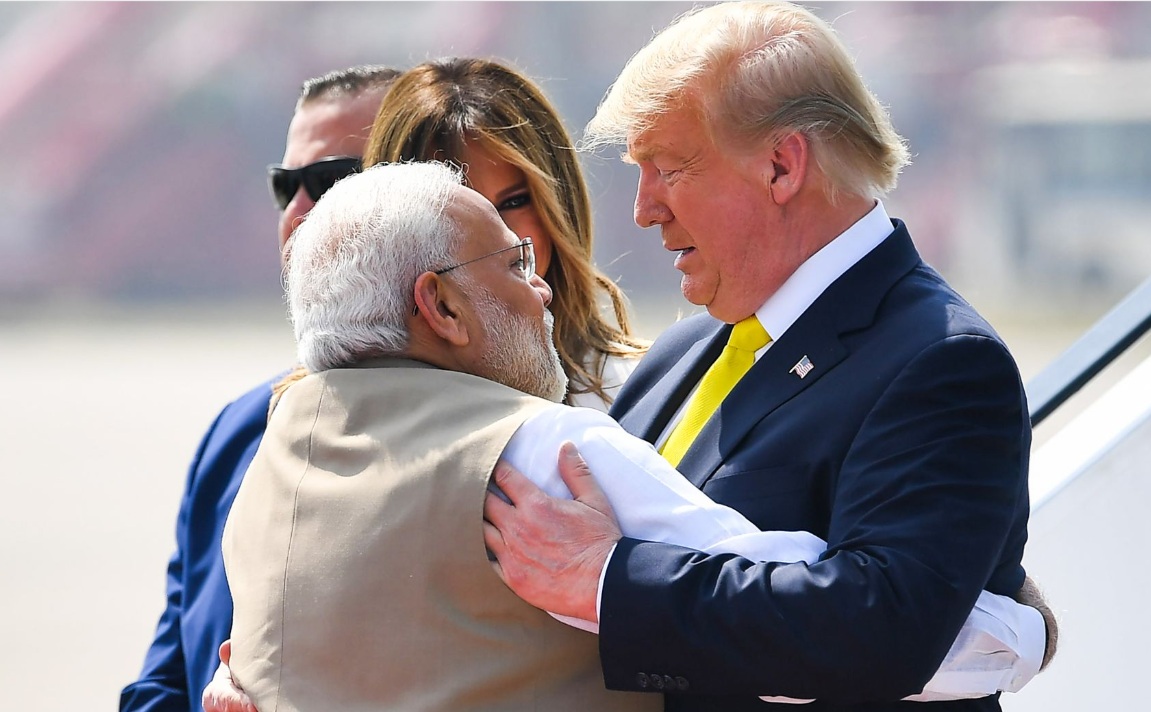
Trump has repeatedly trumpeted warm personal ties, declaring, “I love the Prime Minister. PM Modi is great; he is my friend,” and assuring that “India can count on me and our country 100 per cent.” He has called himself a “big, big fan of Prime Minister Modi,” praised the relationship as one where “we have never been closer to India,” and stated, “We get along great.” Yet his administration’s actions tell a starkly different story. While mouthing such platitudes about unbreakable friendship, Trump’s “America First” policies steamroll Indian interests without hesitation. Indian lives and livelihoods are treated as collateral damage — exposing the hollowness of his rhetorical gestures.
Trump’s Reckless Gunboat Diplomacy
The Trump administration’s heavy-handed maritime blockade has turned vital shipping lanes into a shooting gallery. Firing precision munitions into the engine room of a civilian tanker reflects a dangerous prioritisation of enforcement over human safety and international maritime norms. This is classic imperial overreach — Trump-style gunboat diplomacy that shows zero regard for the collateral damage inflicted on nations he publicly lauds as close partners.
Multiple tankers with Indian crews have faced similar disruptions. Trump’s bombastic Truth Social posts and threats to “hit Iran very hard” stand in sharp contrast to his earlier declarations. His administration offers little more than perfunctory condolences, while continuing operations that endanger civilians from countries it claims as “natural allies.” The contradiction is glaring: effusive praise like “I like your prime minister a lot. He is a good friend of mine” on the one hand, and reckless unilateralism that disregards Indian seafarers’ safety on the other.
India’s Ministry of External Affairs has rightly summoned the US Chargé d’Affaires and lodged a strong formal protest, demanding repatriation of the crew and return of the deceased sailors’ remains. The government must sustain pressure for full accountability and concrete safeguards for Indian maritime personnel, who are critical to global trade.
Energy Crisis Hits Indian Kitchens and Economy
The fallout extends deep into Indian households. Iran’s retaliatory restrictions on the Strait of Hormuz — through which India routes over 80% of its LPG imports and a large share of crude oil and LNG — have triggered severe supply disruptions.
This has produced:
Kitchen crisis: Spiralling LPG and fuel prices that burden middle-class and poor families.
Broader economic pain: Rising inflation, rupee depreciation, and fresh threats to energy security.
While the government works diplomatically to stabilise trade corridors and accelerates alternatives like diversified imports, deep-sea pipelines, and domestic production, the crisis underscores India’s vulnerability to unilateral US actions that contradict Trump’s professed commitment to strong ties with India.
The Imperative of Strategic Autonomy
Such incidents lay bare the limits of even strong bilateral ties when they collide with the strategic obsessions of major powers. The Indian government has highlighted robust engagement with the US, including through the Quad, as important to India’s global posture. Yet the lack of meaningful prior consultation or exemptions for Indian interests in this blockade reveals why strategic autonomy must remain the guiding doctrine.
India’s strategic autonomy — evolved from Non-Alignment into pragmatic multi-alignment — empowers independent decisions based on national interests. It means engaging multiple powers without formal alliances, hedging risks, and building self-reliance in defence, energy, and technology. In the current crisis, this approach is enabling India to protest civilian casualties, reroute supplies, utilise alternatives such as Russian oil, and advocate for multipolar solutions.
Strengths of the doctrine include greater manoeuvrability in a fragmented world and the ability to protect core interests. Challenges remain, particularly energy import dependence and the need for enhanced naval capabilities in distant waters.
A Wake-Up Call for Clear-Eyed Realism
The MT Settebello tragedy is a sobering reminder: in great-power competition, Trump’s flashy “dear friend” gestures and contradictory rhetoric offer little protection when American priorities dominate. Photo-ops and personal chemistry cannot substitute for robust safeguards for Indian citizens and the economy.
The families of the fallen seafarers deserve justice, comprehensive support, and a transparent investigation. India must accelerate strategic autonomy — diversifying energy routes, strengthening maritime presence, and pursuing assertive diplomacy — to ensure national interests are never again treated as afterthoughts in Washington’s calculations.
This Hormuz episode demands a recalibration. India’s foreign policy must prioritise pragmatic self-reliance over illusory special friendships. In an era of unpredictable US unilateralism under Trump, deeper strategic autonomy is not optional — it is essential for safeguarding Indian lives and prosperity.
