


By Suresh Unnithan
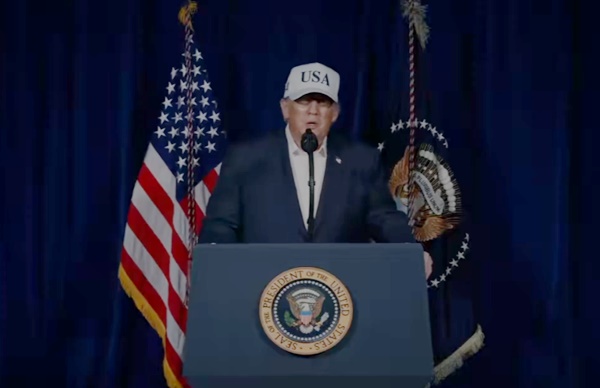
The inevitable has finally commenced- the Iran-Israel-US armed conflict. As of now the Middle East stands on the brink of a catastrophic escalation. The United States and Israel have launched joint “pre-emptive” strikes on Iranian targets, with explosions rocking Tehran, Isfahan, Qom, and other cities. President Donald Trump has announced “major combat operations,” vowing to destroy Iran’s missile industry, annihilate its navy, and eliminate any nuclear threat—while openly calling on Iranians to overthrow their regime. Iran has timely responded the onslaught with barrages of high power ballistic missiles at Israel and multiple US airbases in the Gulf region, including Al Udeid in Qatar, Al Dhafra in the UAE, and facilities in Bahrain and Kuwait. In fact this forced arms conflict exposes the hollowness of American claims to “avert wars” and highlights a dangerous misadventure of Uncle Sam, driven by the pursuit of supremacy over energy resources.
Iran’s military capabilities, often underestimated in Western narratives, represent a sophisticated asymmetric arsenal designed precisely for scenarios like this. According to assessments from sources like Iran Watch and the Center for Strategic and International Studies, Iran maintains one of the largest and most diverse ballistic missile inventories in the Middle East, estimated at 2,500–3,000 operational precision warheads even after the depletion from the June 2025 Israel-Iran war and subsequent replenishment efforts. This includes short-range ballistic missiles (SRBMs) like the Shahab-1/2 (up to 300–500 km range, 770–1,000 kg payload) ideal for saturating nearby US bases in the Gulf, and medium-range ballistic missiles (MRBMs) such as the Emad (1,700 km, improved accuracy), Ghadr-110 (2,000 km), Haj Qassem (1,400 km), and Khorramshahr-4 (up to 2,000–3,000 km with 1,500 kg warhead). These systems feature solid-fuel variants for rapid launch, maneuverable re-entry vehicles, and underground “missile cities” that have proven resilient to prior strikes. Israel estimates post-2025 stocks at around 2,000 MRBMs capable of reaching Israel, with production rates of 50–100 missiles per month allowing quick reconstitution.
Complementing this are thousands of drones, notably the Shahed-136 “kamikaze” series, used effectively in swarms to overwhelm defences. Iran’s air defenses, while not peer to Western systems, include layered S-300 variants and indigenous Bavar-373 systems. On the naval front, the Islamic Revolutionary Guard Corps (IRGC) Navy’s “mosquito fleet”—over 1,500 fast attack craft, many armed with anti-ship missiles—excels in asymmetric warfare. These small, high-speed vessels, combined with mines, submarines, and coastal anti-ship batteries, are optimized to disrupt shipping in the narrow Strait of Hormuz. Recent IRGC exercises in the strait, including live-fire drills and deployments near Bandar Abbas, demonstrate readiness to mine the chokepoint or swarm tankers. Global Firepower 2026 rankings place Iran 16th overall (PowerIndex 0.3199), just behind Israel (15th, 0.2707) but far behind the US (1st). Iran cannot win a conventional war of attrition against American airpower or Israeli precision strikes, but it can inflict “considerable pain”: saturating Gulf bases, hitting Israeli cities (as seen in prior barrages achieving ~16% hit rates despite defences), and triggering oil chaos that punishes the global economy.
This brings us to a key question: Why is the US targeting Iran now, even after Trump’s repeated claims that the June 2025 strikes “obliterated” Iran’s nuclear capabilities? In mid-2025, Trump hailed precision B-2 and submarine-launched attacks on Fordow, Natanz, and Isfahan as a total success, asserting the program was set back “by years” or destroyed outright. Yet US intelligence assessments, including from the Defence Intelligence Agency, revealed the strikes damaged but did not eliminate key sites—stockpiles of enriched uranium survived in some cases, and facilities were rebuilt with hardened protections like concrete sarcophagi at Parchin and Khojir. By early 2026, Iran was reportedly reinstalling centrifuges and pursuing higher enrichment, with officials claiming “progress” in indirect talks. Trump and aides like Marco Rubio escalated rhetoric, alleging Iran was “a week away” from bomb-grade material and developing missiles that “could soon reach the United States”—claims intelligence sources have described as exaggerated or unsupported (DIA estimates any ICBM capability by 2035 at earliest, with no active program targeting the US homeland). The real driver appears geopolitical: control over energy flows. The Gulf holds ~30% of global oil reserves; the Strait of Hormuz funnels 20% of world supply (21 million barrels/day). US strikes, framed as “defending allies” and “preventing nuclear breakout,” align with a pattern of interventions (Iraq 2003, Libya 2011) to secure dominance over these resources, ensuring favorable terms for Western economies and allies like Israel and Gulf monarchies dependent on US protection. Negotiations were ongoing in Geneva, yet the US-Israel axis opted for force—undermining diplomacy and revealing the “peace president” facade.
The economic fallout if the war drags on could be devastating, validating fears of Hormuz closure. Even temporary disruption—via mines, swarms, or Iranian missile strikes on tankers—would spike Brent crude from current levels past $100–150 per barrel, per market analysts. A full blockade for days could double prices, echoing 1970s shocks and triggering inflation in fuel, transport, and manufacturing. Asia (China, India, Japan) imports heavily via the strait; Gulf exporters like Saudi Arabia, UAE, and Kuwait would suffer export halts, tanking their revenues despite diversification efforts. Global recession risks rise: higher energy costs erode consumer spending, strain supply chains, and force central banks into tighter policy. Insurance premiums for shipping would soar, rerouting vessels around Africa adds weeks and costs. Iran’s own 1.6–3.3 million bpd exports (mostly to China) would halt, but the fungible market means everyone pays. Prolonged conflict could see oil average $91+/bbl into late 2026, per BNEF scenarios, derailing post-pandemic recovery and hitting developing nations hardest.
Possible outcomes hinge on duration and restraint. In a short, intense campaign (days to weeks), US-Israel air superiority—bolstered by two carrier strike groups, F-35s, and advanced munitions—could degrade Iran’s missile stocks, production sites, and navy, as Trump vows. Nuclear sites would face renewed hammering, proxies like remaining Hezbollah or Houthis (already weakened) might launch limited attacks, but Iran’s command structure has prepared successors. Regime survival is likely, though internal protests could intensify amid economic pain. A stalemate or prolonged attrition favors Iran’s asymmetric playbook: sustained missile/drone harassment, Hormuz harassment, cyber ops, and proxy chaos, bleeding US resources and public support. Full regime change, hinted by Trump, risks Iraq-style quagmire—instability, refugee waves, empowered hardliners or fragmentation. Direct US ground involvement seems improbable.
*Inputs from Nanditha Subhadra
