


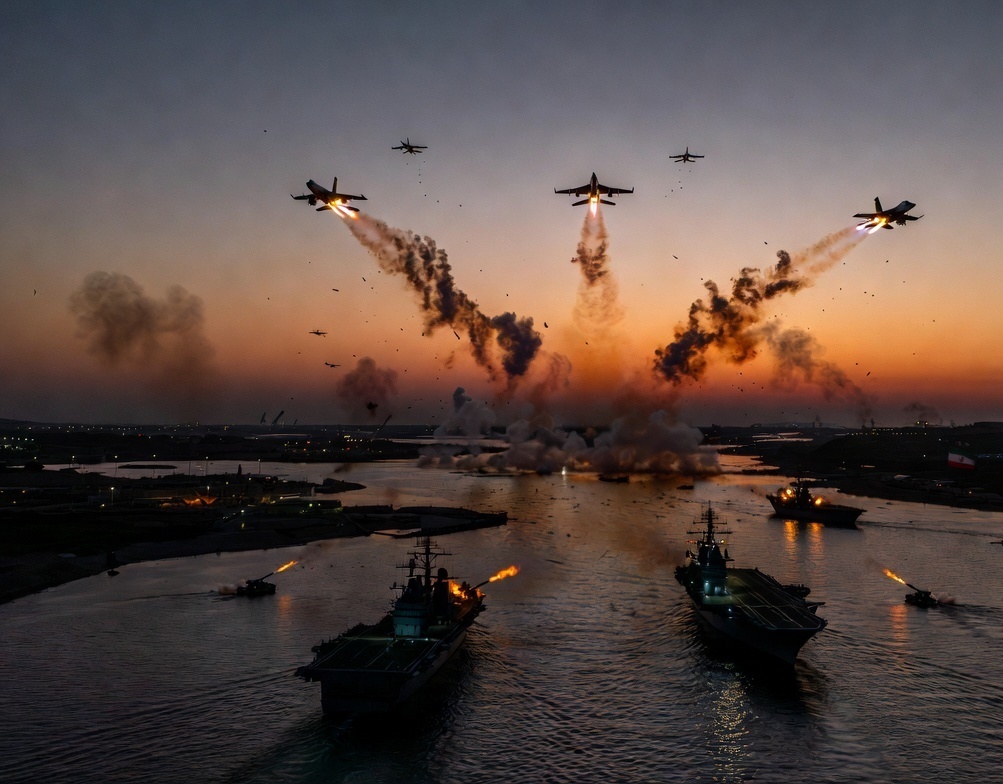
DUBAI : The United States launched targeted strikes on Iranian military assets Saturday following the IRGC’s attack on a commercial vessel and Tehran’s declaration closing the Strait of Hormuz. The escalation threatens global energy markets and risks severe economic repercussions.
The Cyprus-flagged M/V GFS Galaxy suffered major damage with one crew member missing. Iran called it a response to an “unauthorized route.” U.S. forces hit air defenses, coastal radar, and naval targets to restore safe passage.
Iran condemned the strikes and reaffirmed the closure, promising a “severe response” to further aggression. The IRGC has used mines and fast boats to restrict traffic, stranding vessels and testing the limits of the fragile June ceasefire agreement. Officials accuse the U.S. of violating understandings while asserting control over the strategic waterway.
Hormuz Economic Impact
The Strait of Hormuz handles about one-fifth of global seaborne oil and significant LNG volumes daily. Its effective closure has caused immediate and widespread economic shockwaves. Oil prices surged sharply on news of the attacks and blockade, with analysts warning of sustained volatility if shipping remains disrupted.
Hundreds of tankers and commercial vessels are now idled or rerouted, stranding thousands of seafarers and delaying energy deliveries worldwide. This has driven up fuel costs for importers in Europe, Asia, and beyond, threatening higher inflation and slower economic growth. Major Gulf economies, heavily reliant on hydrocarbon exports, face risks to their infrastructure and revenues amid heightened regional tensions.
Longer-term effects could include supply chain disruptions for petrochemicals, increased insurance premiums for maritime shipping, and potential energy shortages in vulnerable markets. Global stock markets reacted nervously, with energy sector gains offset by broader concerns over inflation and recession risks. Diplomatic mediators in Oman and Qatar are working urgently to revive talks, but the economic stakes have risen dramatically, echoing earlier disruptions in the 2026 crisis that already strained global fuel supplies.
President Trump demanded Iran publicly commit to halting attacks and reopening lanes without interference. While both sides indicate willingness for negotiations, the closure underscores the strait’s outsized role in the world economy and the high cost of prolonged conflict.
