

Vedanta’s Nand Ghar Champions a Nutrition Revolution, Empowering Mothers, Transforming Children’s Futures

New Delhi : As the 9th Rashtriya Poshan Maah 2026 concluded, Nand Ghar, the flagship initiative of the Anil Agarwal Foundation (AAF), Vedanta’s social impact arm, reaffirmed its commitment to making nutrition a shared family and community priority. Through a series of initiatives under ‘Nand Ghar Ka Mission, Sampoorn Poshan’, the initiative brought together children, mothers, fathers and communities to translate nutrition awareness into everyday action. Led by the Government of India under Poshan Abhiyaan 2.0, Rashtriya Poshan Maah seeks to transform nutrition into a Jan Andolan by fostering collective responsibility among families, communities, frontline workers and institutions. Reflecting this vision, Nand Ghar’s approach goes beyond awareness to encourage practical, sustainable nutrition habits at home and within communities.
Nand Ghar is transforming India’s Anganwadi ecosystem through modern, technology-enabled centres that integrate nutrition, early childhood care and education, primary healthcare and women’s empowerment. With over 16,000 Nand Ghars across 18 states, the initiative is impacting more than 5 lakh children and 4 lakh women, providing a platform to advance child development and strengthen women’s agency at the community level.
Healthy Mothers, Healthier Children: Placing Women at the Heart of Nutrition
At the heart of Nand Ghar’s approach is the understanding that a child’s nutritional well-being is closely linked to the health, knowledge and agency of the mother. Equipping women with the knowledge to make informed food choices, access to supportive community networks and opportunities to strengthen their livelihoods can help create healthier families and more sustainable nutritional outcomes. During Poshan Maah, expert-led conversations, including a session with nutritionist Dr. Vandana Verma, helped mothers and caregivers better understand children’s nutritional needs, balanced diets and practical ways to incorporate nutritious ingredients into everyday meals. These interactions provided a platform to address questions, exchange experiences and build confidence in adopting healthier food practices.
From Mothers’ Kitchens to Children’s Plates: Making Nutrition a Daily Practice
The Mother’s Food Preparation Programme draws on the knowledge of local women while encouraging nutritious eating habits and strengthening community participation in children’s well-being. By bringing mothers together around meal preparation, it creates opportunities to share knowledge, demonstrate healthier cooking practices and make nutrition a collective responsibility.The programme has so far engaged nearly 2 lakh mothers and supported close to 15 lakh meals, demonstrating the potential of community participation in improving children’s access to nutritious food. Beyond the meals themselves, the initiative encourages mothers to become active participants in their children’s nutritional journeys, helping carry healthier practices from Nand Ghars into their homes.
Building on this foundation, Nand Ghar’s Poshan Maah initiatives extended the conversation to children and other family members, reinforcing the idea that lasting nutritional change begins early and is sustained through collective action at home.
From Healthy Thalis to Shared Caregiving: Making Nutrition a Family Priority
The Healthy Thali initiative introduced children to the concept of balanced nutrition through drawing activities that encouraged them to identify healthy foods and understand the importance of a varied diet. By making learning interactive and age-appropriate, the initiative sought to nurture healthy food preferences from an early age.
Recognising that children’s nutritional well-being depends on the collective support of their families, the Papa Ke Poshan initiative brought fathers into the conversation. Through engagements in Visakhapatnam and Hyderabad, fathers and children explored the importance of healthy eating, caregiving and family participation in children’s development. The initiative reinforced that nutrition is not solely a mother’s responsibility, but a shared commitment that requires the active involvement of the entire family.
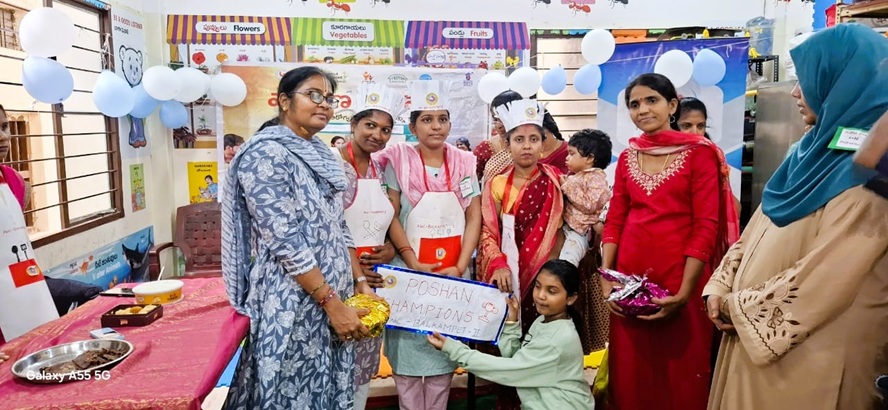
The Poshan Mela initiatives further brought communities together to celebrate women’s knowledge and creativity. Women prepared nutritious recipes using locally available ingredients, highlighting affordable food choices and traditional culinary practices that can support healthier diets. These engagements also recognised women as important knowledge-holders and advocates for better nutrition within their households and communities.
Shashi Arora, CEO, Nand Ghar, said, “Our Chairman Shri Anil Agarwal’s vision for Nand Ghar is to ensure every child thrives through nutrition, education and care, while empowering women to build healthier and more secure futures. We believe that tackling malnutrition at its roots requires informed and engaged mothers, supportive families and women with the means to improve their livelihoods. When women have the knowledge, agency and economic opportunities to make informed choices, the benefits extend to their children and entire families. Aligned with the Government of India’s Poshan Abhiyaan 2.0, our focus is to turn nutrition into a sustained community movement, creating lasting change from Nand Ghar to every household.”
Nand Ghar’s focus on nutrition is closely connected to its wider commitment to women’s empowerment. By supporting women’s skills, livelihoods and greater agency, it seeks to strengthen their capacity to make informed decisions for themselves and their families. Greater economic security can help women exercise more choice over household priorities, including food, healthcare and their children’s development. This integrated approach recognises that tackling malnutrition requires more than changing food habits; it also means strengthening the circumstances in which families make nutritional choices.
As the 9th Rashtriya Poshan Maah concludes, Nand Ghar remains committed to translating awareness into lasting behavioural change. By engaging children early, involving mothers in nutrition practices, encouraging fathers to share caregiving responsibilities and advancing women’s empowerment, the initiative seeks to make nutrition a sustained family and community priority. The ultimate goal is to ensure that healthier practices extend beyond the Anganwadi, becoming part of everyday life in households and communities across India.
***
