


By Suresh Unnithan
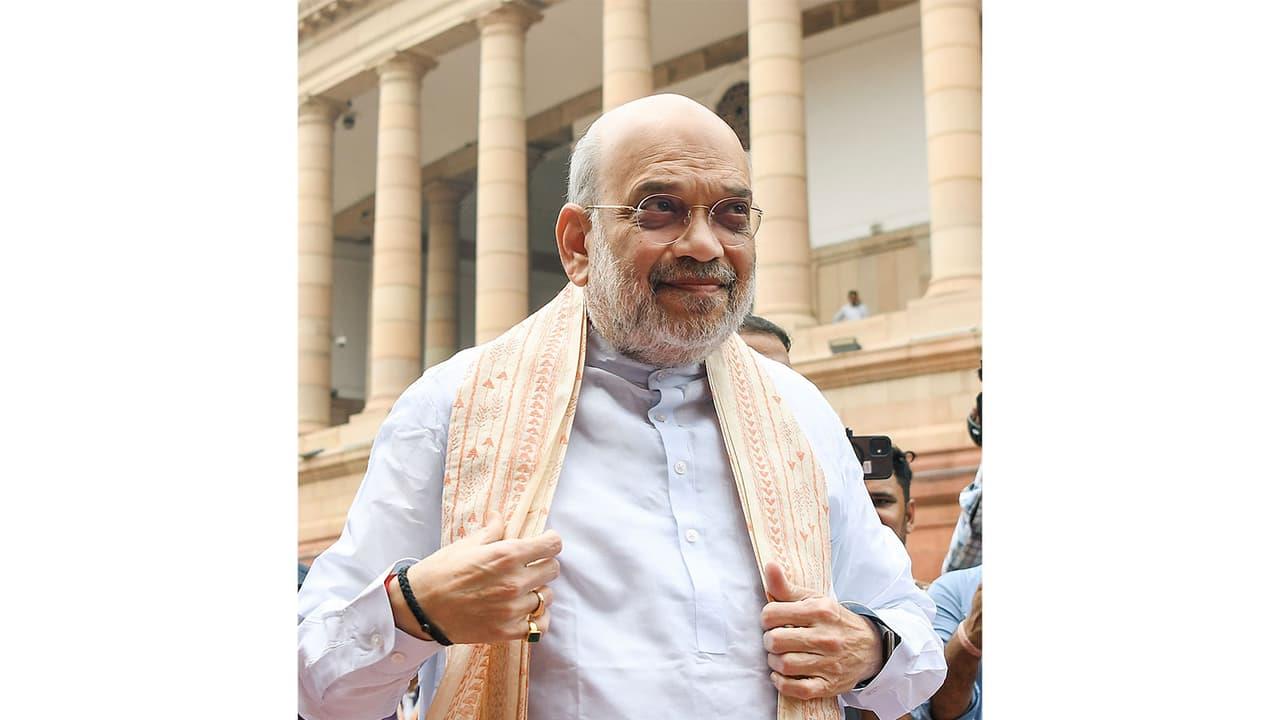
Union Home Minister Amit Shah has remained conspicuously absent from both Houses of Parliament while the Monsoon Session discusses the police action against student protesters at Jantar Mantar on 20 July and similar incidents elsewhere in the country. The Opposition has repeatedly demanded his presence. On 6 August 2026, Rajya Sabha Chairman C. P. Radhakrishnan, responding to sustained appeals from members, directed Parliamentary Affairs Minister Kiren Rijiju with these words: “I request you to consider the request for the Home Minister to come to the House; as Parliamentary Affairs Minister, you can echo the sentiments of the Opposition to the Home Minister.” Yet Shah has not presented himself on the floor.
This absence raises a clear constitutional question. Article 75(3) of the Constitution states that the Council of Ministers shall be collectively responsible to the House of the People. Collective responsibility requires the government to account for its actions before Parliament. Article 88 grants every Minister the right to speak in and take part in the proceedings of either House. These rights carry corresponding duties. When the business of the House concerns the conduct of police forces under the Home Ministry’s control, the presence of the Home Minister is a direct expression of that responsibility.
Former Lok Sabha Secretary-General P.D.T. Achary has stated the position with precision. “A home minister’s presence in Parliament to answer questions relating to his ministry is not optional but a constitutional obligation,” Achary has said. He added: “The Chair has the power and authority to direct a minister to come to the House when there is a justifiable demand from members. It is the Home Minister’s duty under the Constitution to explain what happened, whether there was a lapse on the part of the police, and what action has been taken.” Achary further clarified that a minister’s presence in his chamber does not fulfil this duty. “A minister’s chamber is not officially a part of the House. Under our parliamentary system, a minister has a direct responsibility to the House itself, and that duty cannot be dispensed with.”
Parliamentary practice supports this view. Established rulings of the Rajya Sabha hold that when an important discussion is under way, a Cabinet Minister must be present. A Minister is expected to be in the House when the debate pertains to his Ministry. The Manual of Parliamentary Procedures issued by the Ministry of Parliamentary Affairs notes that the principle of collective responsibility makes it necessary for Ministers to be ready to explain every action of the Government in either House. A roster system exists to ensure that relevant Ministers attend when business concerning their departments is taken up. Continuous absence during debates on police action against students departs from these norms.
The Chairman of the Rajya Sabha is the guardian of the dignity and authority of the House. Under the Rules of Procedure, he has the power to maintain order (Rules 255 and 256), name members for persistent obstruction, and, under Rule 203, refer questions of privilege or contempt suo motu to the Committee of Privileges. Article 105 of the Constitution vests in each House the power to punish for breach of privilege or contempt. While the ultimate penal power rests with the House, the Chairman’s directions carry institutional weight. Persistent disregard of a clear request from the Chair for the presence of a Minister responsible for the subject under discussion raises questions about respect for the authority of the House itself.
Ministers are appointed by the President under Article 75 to discharge their functions. They hold office during the pleasure of the President, but that pleasure operates within the framework of collective responsibility to the Lok Sabha. The Home Minister is specifically responsible for internal security and the Delhi Police. When allegations of excessive force against student protesters are raised in Parliament, the Minister’s presence is required to enable the House to examine the matter and receive an authoritative account.
The constitutional design of parliamentary government rests on the executive’s accountability to the legislature. When the Minister responsible for the relevant department does not appear despite repeated demands and a direction from the Chair, that accountability is weakened. The issue is not one of political convenience or personal preference. It is a question of constitutional duty. As Achary has underlined, presence in the House on matters concerning the Ministry is an obligation, not an option.
