

Electoral Reforms Debate Backfires: A united Opposition Corners Modi Government in Parliament

By Suresh Unnithan
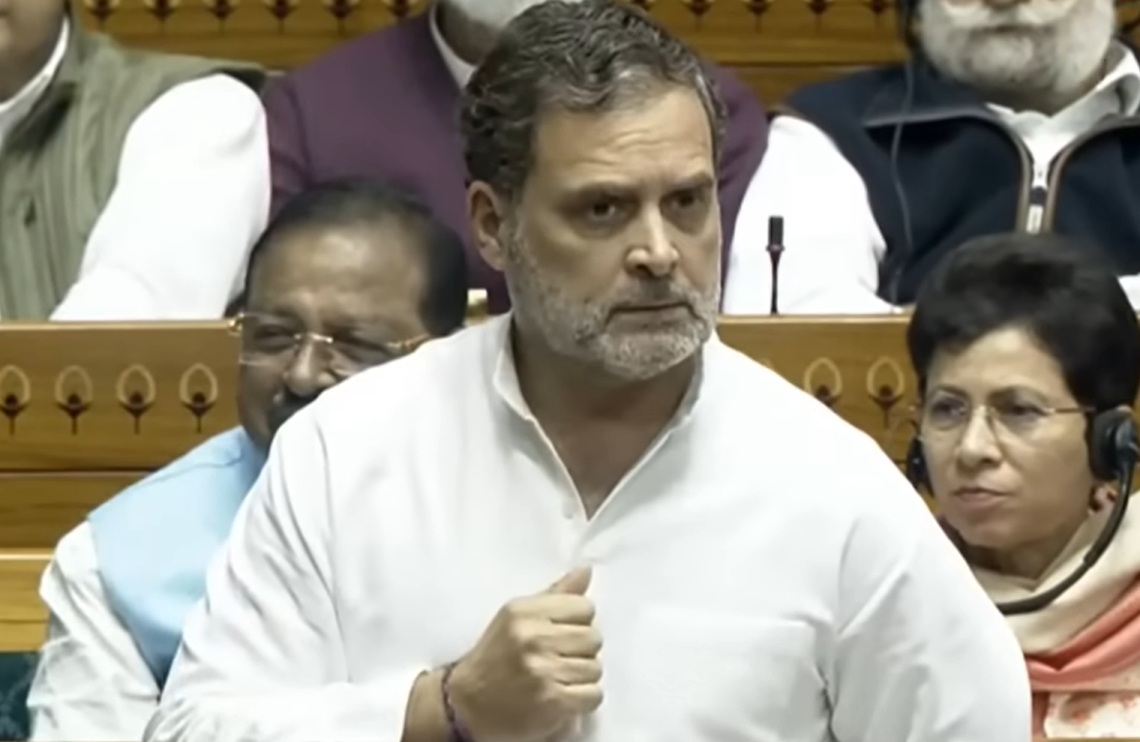
The Modi government’s decision to permit discussions on electoral reforms was bid to defuse parliamentary tensions. But the effort prove counterproductive and the two-day debate on “Electoral Reforms” has gifted on a platter to the opposition a powerful weapon, leaving the Bharatiya Janata Party (BJP)-led coalition scrambling amid a torrent of accusations. What began as a allowance to the INDIA bloc’s demands for scrutiny of the Election Commission of India’s (ECI) Special Intensive Revision (SIR) of voter rolls has morphed into a full-throated assault on the government’s electoral integrity. Leaders including Rahul Gandhi, Manish Tewari, and Akhilesh Yadav have dominated the Lok Sabha floor, grilling the regime on everything from the appointment of poll commissioners to Electronic Voting Machine (EVM) vulnerabilities and flawed voter lists. As the Rajya Sabha gears up for its session today, whispers of Supreme Court escalation grow louder, with citizens’ letters pouring in to Chief Justice Surya Kant, signaling a potential judicial reckoning that could haunt the BJP ahead of upcoming polls.
The Government’s Tactical Blunder
The Winter Session, kicked off on December 1, was already a powder keg, with opposition disruptions centering on the ECI’s SIR—a sweeping voter verification drive rolled out in June 2025 across 12 states and Union Territories, including battlegrounds like Bihar, Uttar Pradesh, and West Bengal. Intended to purge duplicates and “ghost” voters, the SIR has been slammed for its onerous proof-of-citizenship requirements, sparking disenfranchisement alarms among minorities and the poor. The government’s foot-dragging on a dedicated debate stalled proceedings for days, but last week, it caved, expanding the topic to broader “Electoral Reforms” in a move seen by critics as a ploy to muddy the waters.
Yet, on December 9, the Lok Sabha’s 10-hour showdown proved the gambit a grave error. Opposition MPs turned the arena into a prosecutorial chamber, methodically dismantling the ECI’s credibility and, by extension, the Modi administration’s oversight. BJP allies, such as the Janata Dal (United) and Lok Janshakti Party (Ram Vilas), fired back by prodding the opposition to reflect on its string of electoral losses, but the retorts rang hollow against the barrage of evidence-backed charges. As one INDIA bloc strategist noted off-record, “They thought they’d control the narrative; instead, we’ve seized the spotlight.”
Rahul Gandhi encapsulated the opposition’s fury, labeling “vote chori” (vote theft) the “supreme anti-national crime” that “shreds India’s democratic soul.” The debate’s viral clips, amassing millions of views on social media, have amplified this narrative, portraying the government as complicit in systemic sabotage—a narrative the BJP’s defensive deflections have only intensified.
Opposition’s Relentless Barrage: Exposing Cracks in the Electoral Fortress
The INDIA alliance’s strategy was surgical, targeting institutional weaknesses with a quartet of indictments that drew on affidavits, polls, and parliamentary records. Each thrust not only embarrassed the treasury benches but also rallied public sentiment, with live telecasts drawing record viewership.
Election Commissioner Appointments: ‘Executive Hijack’ Demands Judicial Revival
Leading the charge, Congress MP Manish Tewari eviscerated the 2023 Chief Election Commissioner Act, which ousted the Chief Justice of India (CJI) from the selection panel in favor of a Union Cabinet minister—now Home Minister Amit Shah. “This isn’t reform; it’s executive overreach,” Tewari thundered, proposing an overhaul to reinstate the CJI alongside the Prime Minister, Leader of Opposition (LoP) in both Houses, and a neutral expert for “unassailable impartiality.” He underscored how the skewed trio—PM Narendra Modi, LoP Rahul Gandhi, and a cabinet heavyweight—marginalizes dissent, rendering opposition input ceremonial.
Akhilesh Yadav of the Samajwadi Party piled on, insisting “true reforms hinge on an unbiased ECI,” and flagged decisions in the 2024 Lok Sabha polls as proof of governmental puppeteering. Rahul Gandhi escalated the rhetoric, probing the BJP’s “obsession with handpicking ECs” and pledging to repeal the Act’s legal immunity clause retroactively: “We’ll rewrite the rules and hold you accountable.” These volleys echoed a February 2025 open letter to President Droupadi Murmu, backed by 200+ jurists and activists, which branded the law a “democratic dagger,” aligning with the Supreme Court’s 2023 directive for a diverse committee. BJP apologists’ claims of “enhanced autonomy” fell flat, exposing the 2023 law—rammed through amid opposition walkouts—as a festering wound.
EVM Shadows: Push for Paper Trails and Audits to Banishing ‘Doubt’s Ghost’
EVM distrust fueled the session’s emotional peak, with Tewari advocating a full pivot to paper ballots or 100% VVPAT verification to “reignite voter confidence.” He invoked 2024 post-poll challenges, where discrepancies between EVM tallies and VVPAT slips allegedly skewed results in key seats. Gandhi doubled down, outlining “ironclad reforms”: unfettered party access to EVM source code for third-party audits and scrapping the 2023 provision permitting polling station CCTV erasure. “Erasing votes erases India itself,” he declared, tying machine opacity to “total institutional takeover.”
Yadav corroborated with Uttar Pradesh anecdotes of ECI favoritism in EVM logistics. A post-2024 Centre for the Study of Developing Societies survey revealed 45% voter skepticism on EVMs, a statistic opposition MPs wielded like a scalpel. The government’s “conspiracy theory” dismissal only deepened the chasm, as global parallels—like U.S. states mandating paper backups—lent credence to the critique.
SIR Scrutiny: ‘Unconstitutional Overreach’ and the Specter of Mass Deletions
The SIR took center stage as Tewari branded it “constitutionally void,” absent from the Representation of the People Act, 1950, and selectively enforced—full throttle in opposition bastions like Bihar, but softened to a mere “Special Revision” in BJP-ruled Assam. Gandhi spotlighted Bihar’s “1.2 lakh duplicate entries,” urging pre-election machine-readable lists for party vetting and halting SIR’s “targeted purges” that risk axing 65 lakh names without recourse.
Yadav decried Uttar Pradesh’s “arbitrary exclusions,” linking them to BLO harassment and fatalities. The ECI’s November 24 Supreme Court affidavit—conceding its deduplication algorithm was “flawed and junked” post-2023 despite earlier praise—provided damning ammunition, revealing tech failures that could disenfranchise millions.
Voter List Vigil
Underpinning it all was a unified demand for “clean, contestable rolls”: mandatory disclosures of additions/deletions 30 days pre-poll, Aadhaar-optional proofs, and BLO protections. Gandhi’s Bihar data dump—flagging systemic ghosts—resonated with ground reports of 20% deletion rates in vulnerable demographics, per Association for Democratic Reforms filings.
Government’s Flailing Riposte
Under siege, Union Minister Kiren Rijiju and BJP MPs resorted to deflection, dredging up Congress-era scandals like the 1984 riots and 2010 Games graft to impugn opposition motives. SIR was hailed as “voter purification,” and ECI independence touted, but specifics on appointments or VVPATs were dodged, prompting jeers of “stonewalling.” The 2024 verdict—BJP’s seats slashed despite stable vote share—loomed unspoken, a reminder of how electoral trust underpins mandates.
Petitions and Pleas Signal Escalation
The parliamentary inferno has kindled judicial flames. On December 9, the Supreme Court slapped notices on the ECI over Assam’s SIR carve-out and West Bengal BLO threats, CJI Kant cautioning against “democratic disorder.” In Association for Democratic Reforms v. ECI (WP(C) 640/2025), the bench mandated deletion disclosures and Aadhaar acceptance, probing Bihar’s SIR for overreach. A concurrent hearing assailed the ECI’s “citizenship inquisition” as an undue load on 1.4 billion souls.
Citizen activism surges: Letters to CJI Kant on ECI picks and EVM probes mirror a November 2025 missive from 272 notables—including ex-judges—defending the poll body yet decrying “besmirching.” Opposition insiders tease bundled writs by early 2026, teeing up pre-state election drama.
Boomerang’s Bite
This “reforms” debate, envisioned as a masterstroke of bipartisanship, has recoiled as a Modi government’s albatross, magnifying 2024’s aftershocks and eroding the aura of invincibility. With Rajya Sabha echoes today and courts circling, the BJP confronts a fork: stonewall and invite overreach, or yield and concede ground. As Gandhi concluded: “India’s democracy is unparalleled—safeguard it.” For the regime, the verdict may hinge not on rhetoric, but restoring faith before the urns decree anew. The concession that was meant to conciliate has cornered them instead.
