

Fresh U.S.-Iran Clashes Spark Regional Concerns Over Oil Prices Amid Strait of Hormuz Tensions

By Suresh Unnithan
Renewed military exchanges between the United States and Iran have reignited fears over the Strait of Hormuz, the world’s most critical energy chokepoint, driving up global oil prices and raising alarms about prolonged disruptions to roughly 20% of the world’s petroleum supplies.
U.S. Central Command reported strikes on approximately 90 Iranian targets in recent days, focusing on sites near the strait, in response to Iranian attacks on commercial vessels and U.S.-linked facilities across the Gulf. Iran retaliated with missile and drone strikes on American assets in Bahrain, Kuwait, Qatar, and other regional locations. President Donald Trump declared the fragile June 2026 ceasefire “over,” escalating concerns of a return to broader hostilities.
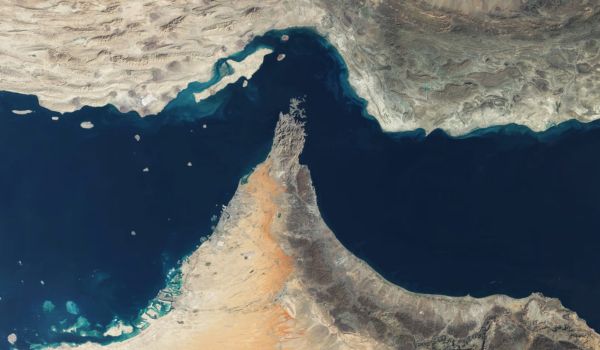
The Strait of Hormuz, a narrow passage between Iran and Oman, handles about 20-21 million barrels per day (b/d) of crude oil, condensate, and petroleum products — equivalent to one-fifth of global petroleum liquids consumption and a quarter of seaborne oil trade. It is equally vital for LNG exports from Qatar and the UAE. Asian markets absorb 84-89% of these flows, with China taking the largest share (around 37-48%), followed by India (14-15%), South Korea, and Japan. For India, which imports over two-thirds of its oil, any sustained disruption poses a serious threat to energy security and economic stability.
Even without a complete closure, tanker traffic has dropped sharply due to attacks, insurance spikes, and rerouting. Alternative pipelines from Saudi Arabia and the UAE offer only partial relief (around 8-9 million b/d capacity). The latest flare-up has reversed recent price declines. Brent crude surged more than 5% in sessions last week, approaching multi-week highs near $78 per barrel, while WTI followed with strong gains. Analysts warn that escalated disruptions could push prices significantly higher.
This volatility comes against the backdrop of the broader 2026 Iran conflict, which earlier caused the largest supply shock in oil market history. Prices had spiked dramatically (surpassing $120/bbl at peaks), and the current tensions risk repeating that pattern. Higher energy costs are already translating into rising gasoline prices in the U.S. during peak summer driving season, emerging as a political flashpoint. In Asia and India, the burden includes inflated import bills, potential rupee pressure, and downstream impacts on transport, agriculture, and manufacturing.
Broader Economic Ripples
The strait’s importance extends beyond oil. Disruptions affect LNG supplies, fertilizer, petrochemicals, and food imports for Gulf states. Global supply chains face higher freight costs and delays. The International Energy Agency has described the overall crisis as the “greatest global energy security challenge in history,” with risks of inflation, slower growth, and even a shallow recession if flows remain curtailed for extended periods.
For Kerala and India, indirect effects are notable through higher fuel and living costs, though strategic reserves and diversified sourcing (e.g., from Russia and the U.S.) provide some buffer. However, prolonged instability could strain these measures.
Diplomats are engaged in mediation efforts, but markets remain on edge. The cycle of strikes highlights the fragility of ceasefires in this volatile region. Gulf Arab states, caught in the crossfire, have intercepted threats while condemning sovereignty violations.
As the situation evolves, the world watches whether restraint and negotiation can prevail to secure this vital maritime artery. For import-dependent economies, the episode reinforces the urgent need for energy diversification, robust reserves, and proactive diplomacy.
The coming days will determine if the latest clashes mark a temporary spike or the beginning of deeper disruptions with far-reaching consequences for global energy markets and economic stability.
