

From ‘Abki Baar Trump Sarkar’ to Tariff Armageddon: Trump’s Sanctions Betray Modi’s Blind Faith in a Fickle Ally

By Suresh Unnithan
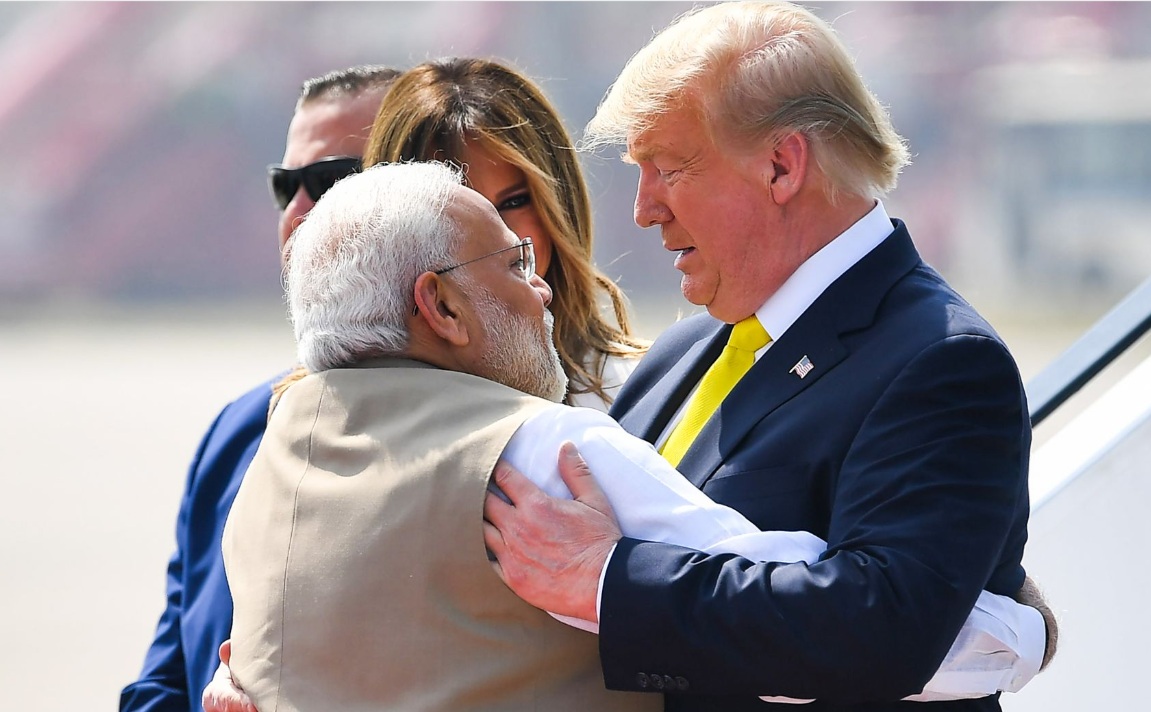
In September 2019, at a massive rally in Houston, Texas, Indian Prime Minister Narendra Modi introduced Donald Trump to a roaring crowd of over 50,000 Indian-Americans as “my friend, a friend of India, a great American president.” Modi showered Trump with praise, calling him “warm, friendly, accessible, energetic and full of wit.” This wasn’t just diplomatic nicety; it was a public endorsement that echoed across India, where supporters even conducted elaborate hawans—Hindu fire rituals—for Trump’s prosperity and victory. In July 2024, following an assassination attempt on Trump, the Hindu Sena in New Delhi performed a special hawan praying for his long life and well-being. Later that year, ahead of the U.S. elections, priests led by Mahamandelshwar Swami Vedmutinand Saraswati held another ceremony, chanting mantras for Trump’s electoral success, citing his supposed support for Hindu communities. Fast forward to January 2026, and the irony couldn’t be starker: the same Trump, now back in the White House has Greenlit, a bipartisan Sanctions Bill that threatens to slap a staggering 500% tariff on India for buying Russian oil—on top of the 25% penalty already imposed in 2025 for ongoing business ties with Russia. Modi’s silence on this economic assault and Trump’s derisive comments about India speaks volumes about the pitfalls of personal diplomacy over strategic pragmatism.
The Tariff Bomb: A Direct Hit on India’s Economic Lifeline
The ‘Sanctioning Russia Act of 2025,’ co-authored by Senators Lindsey Graham and Richard Blumenthal, isn’t just tough talk—it’s a weaponized trade policy designed to cripple Russia’s war economy in Ukraine by punishing its key customers. Republican Senator Lindsey Graham, announcing Trump’s approval on Wednesday, January 7, 2026, stated that the bill would “allow” Trump to “punish countries who buy cheap Russian oil fuelling Putin’s war machine.” Graham further described it as “well-timed, as Ukraine is making concessions for peace and Putin is all talk,” emphasizing its role in pressuring Moscow through global isolation. For India, the world’s second-largest buyer of Russian crude, this means tariffs escalating from the current 50% (a 25% reciprocal tariff plus a 25% penalty for Russia ties imposed in August 2025) to an eye-watering 500% on Russian oil imports and related dealings.
The economic fallout for India could be catastrophic. India relies on Russian oil for over 40% of its imports, benefiting from discounted prices that have saved billions amid global energy volatility. A 500% tariff would effectively make these imports prohibitively expensive, forcing India to pivot to costlier alternatives from the Middle East or the U.S. itself. This shift could spike domestic fuel prices by 20-30%, fuelling inflation that’s already hovering around 6-7%. Industries like refining, petrochemicals, and transportation—key drivers of India’s GDP—would face skyrocketing input costs, potentially shaving 1-2% off annual growth projections.
But the pain doesn’t stop at energy. The Bill extends sanctions to financial institutions dealing with Russian entities, which could disrupt India’s broader trade with Russia, including defence procurements like S-400 missiles and fertilizers essential for agriculture. Indian exports to the U.S., already under pressure from Trump’s “America First” agenda, could face retaliatory scrutiny. With bilateral trade exceeding $190 billion, a full-blown tariff war might erode India’s trade surplus with the U.S., leading to job losses in sectors like IT, pharmaceuticals, and textiles. Stock markets have already reacted: India’s benchmarks plummeted over 4% today (January 8, 2026), marking the worst day in months amid tariff fears and foreign outflows. Small and medium enterprises, still recovering from post-pandemic woes, could be decimated, exacerbating inequality in an economy where rural distress is rampant.
Worse, this comes amid Trump’s maverick comments belittling India. In recent statements tied to the 2025-2026 diplomatic crisis, Trump has reportedly referred to India’s economy as “dead” and accused it of being a “tariff king” that exploits U.S. generosity while cozying up to adversaries like Russia and China. These barbs aren’t new—Trump has long criticized India’s trade practices—but their timing, amid escalating sanctions, underscores a betrayal of the “personal friendship” Modi once touted.
A Leadership Vacuum in Foreign Policy
While the Chief of the White House is operating to ruin the Indian economy, the man who once rallied crowds with “Abki Baar Trump Sarkar” (This time, Trump government) has been conspicuously quiet. No public rebuttal, no diplomatic pushback, not even a tweet acknowledging the threat to India’s sovereignty. This silence is not just puzzling—it’s perilous. By prioritizing a bromance over India’s interests, Modi risks projecting weakness on the global stage. India’s non-aligned foreign policy, balancing ties with the U.S., Russia, and others, is strength, not a flaw. Yet, Modi is unwilling to call out Trump’s hypocrisy.
Critics argue this stems from Modi’s overreliance on personal rapport with world leaders, from “hug diplomacy” to stadium spectacles. But friendships in geopolitics are fleeting; interests are eternal. Trump’s actions expose the naivety of betting India’s future on one man’s whims. Had Modi diversified alliances more aggressively—perhaps deepening ties with Europe or accelerating domestic energy reforms—these tariffs might sting less. Instead, his government faces a scramble, with whispers of emergency talks but no bold countermeasures.
In the end, Trump’s tariff bomb isn’t just about punishing Russia—it’s a deliberate economic siege on India’s lifelines, layered atop his own venomous rhetoric. When he sneered in July 2025 that India and Russia could “take their dead economies down together,” many dismissed it as crude bluster from a man who once basked in Modi’s stadium cheers. Yet here we are in January 2026: a proposed 500% tariff wall, threats of total trade strangulation, and relentless pressure on the very energy and defence ties that keep India resilient and independent. Is this mere coincidence—or is Trump methodically turning his casual insult into grim policy reality, using the full weight of American power to hobble an economy he publicly declared “dead”? India, still clocking 6-7% growth, poised to become the world’s third-largest economy by the late 2020s, and defying every doom-laden forecast, refuses to fit that caricature. If Modi’s personal friendship fails to buy an enduring alliance, perhaps it’s finally time for cold, calculated statecraft. India has to defend her interests fiercely—not to watch quietly as a supposed ally tries to make “dead economy” a self-fulfilling label. The hawans have failed; now the hard choices begin.
Input by by Nanditha Subhadra
