

JK Tyre Rally of Himalayas 2026 Concludes with a Display of Grit, Speed and Himalayan Endurance

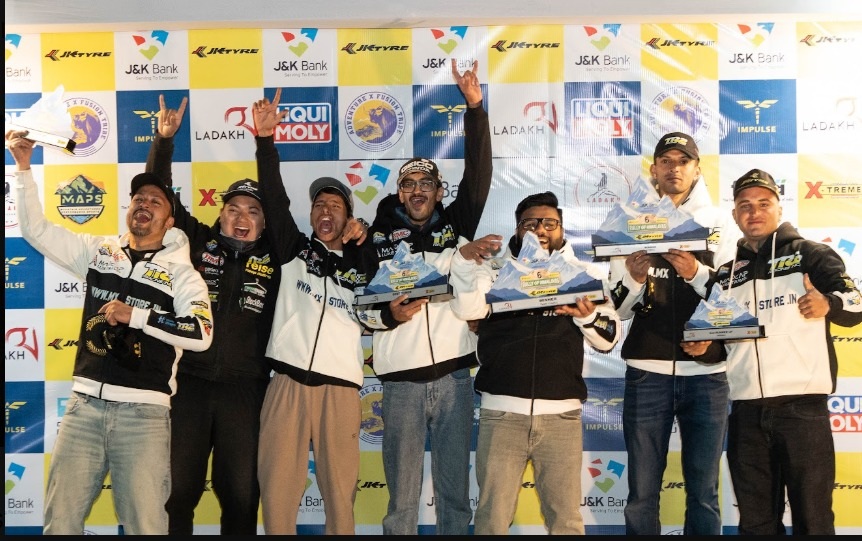
Manali to Padum: The J&K Bank presents JK TyreRally of Himalayas 2026, one of the country’s most challenging rally raids, concluded on 30th September after more than four days of intense competition across the high-altitude Himalayan landscapes of Lahaul-Spiti and Zanskar. The event brought together 50 cars and 80 riders to tackle some of India’s most demanding mountain routes, where skill, precision, stamina and split-second decision-making were tested at every stage.
Competitors faced demanding Himalayan conditions as they navigated steep inclines, fast stretches, unpredictable weather and high-altitude terrain that placed additional pressure on both machines and riders. From technical stages to challenging route navigation, this year’s rally reinforced its reputation as a true rally raid, testing competitors on both speed and consistency.
Flag-Off from Manali and the Lahaul-Spiti Challenge
The rally was flagged off from Manali on 26 September 2026. Over the following days, participants pushed through rugged routes across Lahaul and Spiti, tackling challenging stretches that tested endurance and technical ability. The route featured iconic and demanding Himalayan passages, including the strategic crossing of Kunzum La, known for its extreme conditions and challenging driving lines.
As the rally progressed, competition intensified. Teams and riders had to manage their pace while protecting their vehicles and equipment from the impact of altitude and rugged terrain, where even minor mechanical issues could bring an entire campaign to an end.
Race Leadership: Rajiv Yadav Sets the Pace Early
From the opening day, Rajiv Yadav established a strong presence in the field, taking the lead on Day 1. He built momentum through the early stages while keeping a close watch on strong local competition, particularly Aaryak Rana, who remained among the closely tracked competitors during the initial phase.
With the rally becoming increasingly technical, maintaining position became as important as pushing for outright pace. The field delivered disciplined performances, while the standings began to reflect the competitors capable of combining speed with consistency across the demanding stages.
72 km Special Stage and Reverse Format Raise the Challenge
The rally featured a standout 72-km competitive stage that was subsequently run in the reverse direction. The format presented a fresh challenge, requiring competitors to adapt braking points, turn-in timing and pacing strategies to a familiar route approached from a different direction.
One of the significant moments of the rally came when Lakhpa Tsering, the 2015 Raid de Himalaya winner, was forced to withdraw his Toyota Hilux following a technical issue. His withdrawal highlighted the importance of mechanical reliability alongside driving skill in high-altitude rally raids.
Daksh Gill Takes Control from Losar to Shinku La
Following the reverse stage, the rally’s momentum shifted towards Daksh Gill, who delivered strong performances and secured the next two stages, beginning with the reverse Losar to Gramphu stage.
From there, the competition advanced towards Shinku La, with the route climbing to elevations of more than 16,500 feet. At such altitudes, speed alone is not enough; control, traction management and careful throttle application become critical. Gill’s ability to maintain his pace under these demanding conditions played a key role in shaping the race outcome.
Zanskar Valley: A High-Speed Test at Altitude
The rally then moved into the Zanskar Valley, where the terrain created one of the most demanding phases of the event. Competitors faced a high-speed run across the region’s challenging high-altitude terrain, characterised by its dramatic, desert-like landscape.
In this critical phase, Daksh Gill once again demonstrated strong pace and consistency, translating his speed into a strong stage performance. During the Zanskar stretch, he reached speeds of up to 200 km/h, underlining the combination of speed, control and precision required to compete at the highest level in Himalayan rally raids.
The Zanskar stage proved decisive for the standings and reinforced the importance of combining outright pace with control in extreme terrain.
Finish at Padum: Celebration in Zanskar
The rally concluded in Padum, the headquarters of Zanskar district, marking the culmination of more than four days of demanding competition across some of the most challenging terrain in the Himalayas.
Competitors, organisers and supporters gathered to recognise the efforts of the riders and crews who completed the demanding route and delivered standout performances under conditions few motorsport events can replicate.
Category Winners and Podium Highlights
Moto (2-Wheel)
- Winner: Dhritimaan Singh
- Runner-up: Happy Verma
- Second Runner-up: Nitish Bharadwaj
Xtreme (4-Wheel)
- Winner: Rajiv Yadav / Rohit Gowda
- Runner-up: Aaryak Rana / Aditya Sharma
- Second Runner-up: Daksh Gill / Virender Kashyap
Adventure (4-Wheel)
- Winner: Soham Hazra / Nirav Mehta
- Runner-up: Santosh HM / Prakash Muthusamy
- Second Runner-up: Chandra Mouli / Sri Sakthi Kumar N
- Third place: Sachin Mandhwani / Adhitya Anthony
Prize Distribution Ceremony and Cultural Evening
Following the conclusion of the rally raid, the event hosted a prize distribution ceremony featuring cultural performances from the region. The evening celebrated the achievements of competitors while reflecting the warmth and hospitality of the Himalayas.
The ceremony was attended by dignitaries including:
- Arava Gopi Krishna, IAS — Administrative Secretary, Transport and Housing and Urban Development
- Moses Kunzang — Staff Officer to Chief Secretary
- Tsewang Dorjai — DGM-cum-Zonal Head, J&K Bank
- Rigzin Sangdup — SP, Zanskar
- Gulam Mohammed — CEO, Tourism Development Authority / ADDC Kargil
- Sarwar Shehzad — SDM, Zanskar
****
