

Local Body Polls: Jhalawar’s civic shock a warning to ruling BJ from Vasundhara Raje’s own fortress.

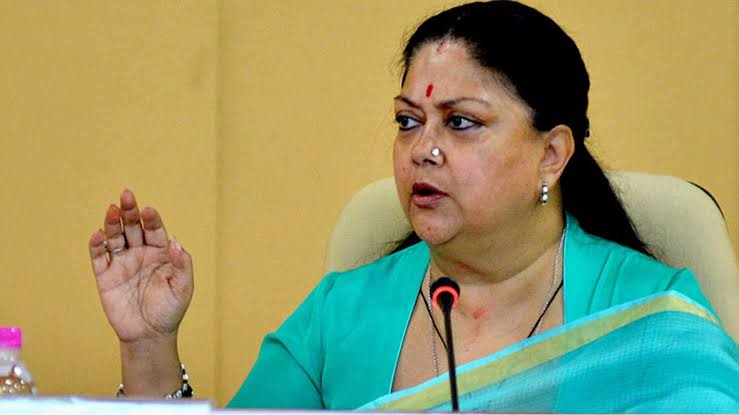
Jaipur: In a result that punctured one of Rajasthan’s most durable political myths, Congress seized 29 of 45 wards in the Jhalawar Municipal Council. The BJP was reduced to 13, with two Independents and one AAP winner completing the board. The numbers matter because Jhalawar is not just another Hadoti town. It is the long-time base of former chief minister Vasundhara Raje, Jhalrapatan MLA since 2003, five-time former MP from the old Jhalawar seat, and mother of five-time Jhalawar-Baran MP Dushyant Singh. Congress also took majority in Bhawani Mandi, Khanpur and Dag in the same district.
Statewide, the picture is almost the opposite. Counting across 309 urban local bodies after voting on September 9 and 11 showed the ruling BJP ahead in the larger civic contest, with Congress competitive but not dominant. Jaipur’s early rounds favoured the BJP. That contrast is the first clue: this is a local rupture, not proof that the party has lost urban Rajasthan.
Three explanations are already circulating. The first is the “Scindia factor.” Raje is a Scindia by birth—daughter of Vijaya Raje Scindia, aunt of Union minister Jyotiraditya Scindia. For three decades that royal-political brand converted Jhalawar into a personal stronghold. The brand has not vanished, but municipal contests are won by booth workers, ticket choices and neighbourhood grievances, not by family pedigree. Jyotiraditya’s rise inside the BJP in Madhya Pradesh does not organise Jhalawar’s wards. If there is a Scindia lesson here, it is narrower: dynastic capital erodes first at the civic level, where voters punish poor local delivery even when they still back the family in Assembly and Lok Sabha races.
The second theory—that Raje “played against” the BJP—is the most sensational and the least evidenced. There is no public proof of a boycott or sabotage in this campaign. She was restored as a BJP national vice-president only last month, a signal of partial rehabilitation after being passed over for chief minister in 2023 in favour of Bhajan Lal Sharma. What is documented is a long chill: limited campaigning outside her son’s constituency in 2024, public remarks that had to be walked back, and a bruising Anta Assembly bypoll loss in November 2025 that party insiders already read as a dent in her Hadoti grip. Sidelining and half-hearted ownership can look like opposition from below even when no one issues an order to lose.
The third explanation—simple BJP unpopularity—fits Jhalawar better than the state. Local reporting points to unrest over candidate selection and factionalism in the district unit. Independents and AAP peeling off two and one wards is classic rebel-vote arithmetic. Civic incumbency is unforgiving: drains, water, roads and patronage networks decide parishad polls more than national slogans. Congress, weaker statewide and itself faction-ridden, still concentrated enough local energy to convert that opening.
The honest reading is a blend. The BJP is not collapsing in Rajasthan’s cities. Raje did not have to knife her own party for the fortress to crack. The Scindia aura no longer automatically transfers to every municipal ticket. After two years of dual power centres—Sharma’s government and Raje’s residual mass base—the cadre in Jhalawar looks divided, and a divided cadre loses wards. For 2028, the warning is specific: if the party cannot reconcile its most recognisable Rajasthan face with its current organisational command, the next loss will not be a parishad board. It will be an Assembly map that used to be painted saffron by default.
