

Successful Swap Liver Transplant Saves Lives Of Two Patients at Medicover Hospital, Navi Mumbai

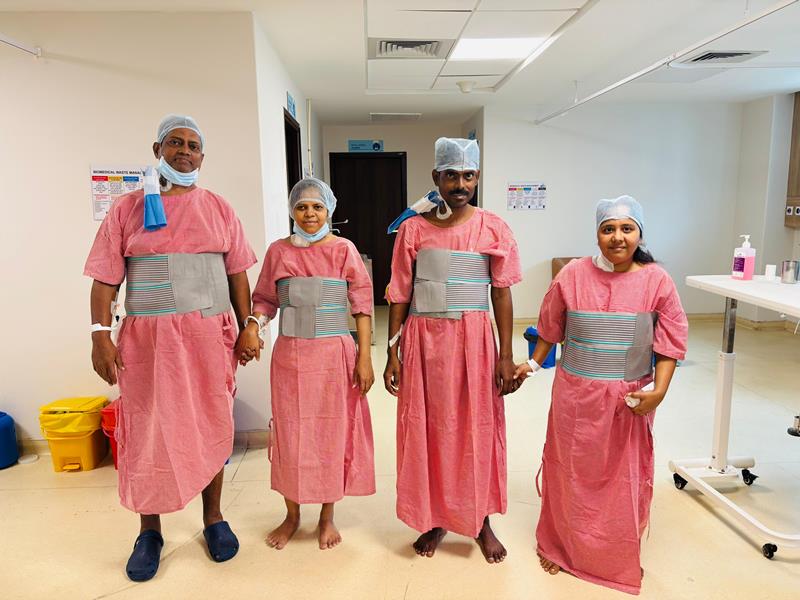
Navi Mumbai: A team led by Dr Sharan Narute, supported by a highly skilled team of liver disease, HPB surgery, and transplant specialists, accomplished a landmark success with a complex swap liver transplant. In this complex procedure, two women came forward to selflessly donate portions of their livers to each other’s husbands, both of whom were battling end-stage liver failure and were unable to receive direct donations due to blood group mismatch. Both patients have recovered well and are gradually returning to their normal lives.
The patients, 53-year-old Mr Mahendra Gamre, a businessman from Chiplun, and 41-year-old patient Mr Pawan Thigle, a working professional based in Nanded, were battling end-stage liver disease. Both patients struggled with problems such as jaundice, ascites, bilateral lower limb swelling, abdominal distention, loss of appetite, and muscle wasting. For over a year, they had been waiting and hoping for a suitable transplant, enduring repeated hospitalizations and the uncertainty of survival. As their health continued to decline, every passing day became a greater struggle, not only for them but also for their families, who watched their loved ones suffer helplessly. Mr. Mahendra Gamre visited Medicover Hospital in Kharghar, Navi Mumbai, while Mr. Pawan Thigle was under care at the Pune-based Medicover Hospital. It was during their treatment that the possibility of a life-saving swap liver transplant was identified. The situation had reached a point where timely intervention was the only chance to save their lives, turning their fight into a race against time.
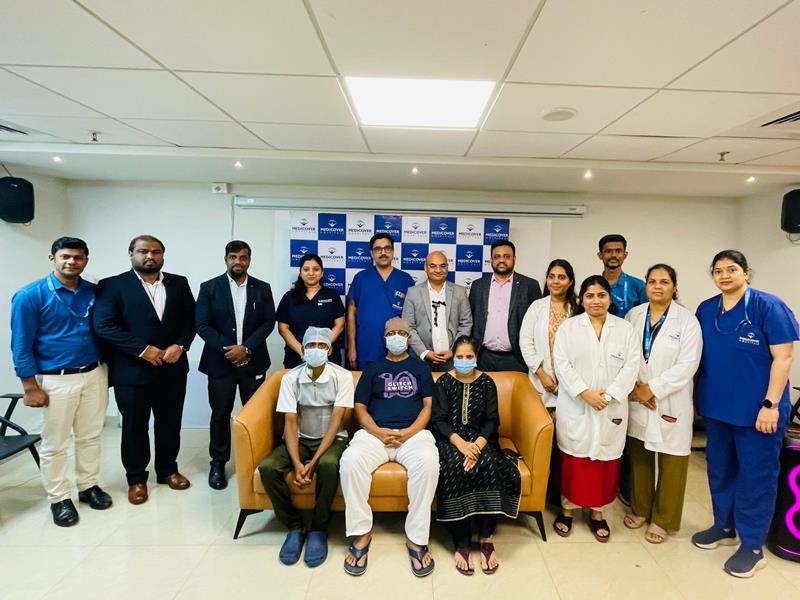
Dr Sharan Narute, Director – Liver Transplant and HPB Surgery at Medicover Hospitals, Kharghar, said, “Wives of both the patients were willing to donate a part of their liver, but medical evaluation showed that their organs were incompatible with their husbands. Since none of the family members had a matching blood group, the transplants were delayed, leaving both patients in a critical state and in need of repeated hospitalizations. Ultimately, a swap liver transplant emerged as the only option that could save their lives. In such cases, where donors within a family are not compatible, swapping donors between two families offers a ray of hope. This ensures that patients in urgent need of a liver transplant can still receive a life-saving procedure.”
Dr Sharan Narute further added, “In a rare act of courage and love, 41-year-old Mrs. Juhi Gamre, wife of Mr. Mahendra Gamre, donated a part of her liver to save Mr. Pawan Thigale, while 38-year-old Mrs. Bhavana Thigle, wife of Mr Pawan Thigle, gave a part of hers to save Mr Gamre. These life-saving transplants were carried out at the same time in four operating theatres, despite both donors having 2 portal veins, where Complex Vascular Reconstruction was required. The surgery lasted for nearly 10 to 12 hours. Both patients were able to walk out of the hospital within 11 days, while their wives recovered in 7 days and were discharged. Coordinating four surgeries simultaneously across four operating rooms, all under anesthesia, was an enormous challenge. Still, the flawless execution and successful outcome speak volumes about the expertise of the medical team.”
Careful counseling and thorough preparation of the families played a crucial role in ensuring the smooth operation of this complex procedure. “Not performing a transplant at the right time could have led to complications like Hepato-renal syndrome (renal failure in patients with advanced chronic liver disease), Hepato-Pulmonary syndrome (low oxygen levels and shortness of breath in people with advanced liver disease), portal hypertension, hepatic encephalopathy, variceal bleeding, or death. Precautions advised to the couples were taking immunosuppressants and other medicines exactly as prescribed, not to skip or self-adjust doses, avoiding crowded places, wearing a mask when needed, and practicing strict hand hygiene. Organ donation is an act of courage and compassion that saves lives. Timely medical intervention, strong family support, and expert healthcare teams can turn hopeless situations into stories of survival. Society should embrace awareness about organ donation, encourage timely treatment, and support families going through transplant journeys,” said Dr Sharan Narute.
What could have been an impossible situation turned into a story of hope, thanks to the determination of the families and the skill of the doctors. Liver transplantation often faces limitations due to a shortage of compatible donors. Swap liver transplants emerge as a life-saving option for patients when direct family donations are not feasible due to mismatched blood groups or organ size.
Both couples were thankful to the team of doctors for giving their loved ones a second lease of life. With organ donation rates in India still relatively low, swap transplantation is proving to be a hope for families battling advanced liver disease.
