

Sultanpur Verdict: A Legal Relief That Rewrites the Political Narrative for Congress and BJP

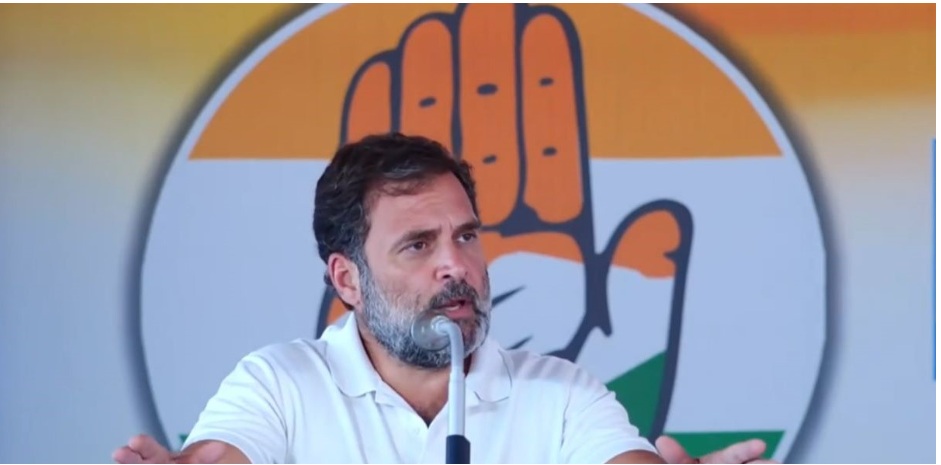
By SKV
The October 26, 2026, acquittal of Rahul Gandhi by a special MP-MLA court in Sultanpur has done more than close an eight-year-old defamation case. By ruling that Gandhi’s 2018 remarks calling then-BJP president Amit Shah a “murder accused” were not defamatory and that the complainant, local BJP leader Vijay Mishra, lacked standing as an “aggrieved person,” Additional Chief Judicial Magistrate Shubham Verma has handed the Congress a clean judicial finding that the complaint appeared politically motivated. The judgment’s reasoning—that the narrative was suspicious, unrealistic and uncorroborated—transforms a routine trial outcome into a political document both parties will now weaponise.
The Shadow of the Modi Surname Conviction
The political weight of the Sultanpur acquittal is best understood against the backdrop of the 2023 “Modi surname” case. In April 2019, during a campaign speech in Karnataka, Gandhi had remarked that “all thieves have the Modi surname,” a comment widely interpreted as targeting Nirav Modi, Lalit Modi and others. A criminal defamation complaint filed by Gujarat BJP MLA Purnesh Modi resulted in a conviction by a Surat magistrate court in March 2023, with a two-year sentence. Under the Representation of the People Act, a sentence of two years or more triggers automatic disqualification from Parliament; Gandhi was accordingly disqualified from the Lok Sabha. The Supreme Court later stayed the conviction in August 2023, restoring his membership, but the episode remains the clearest demonstration of how a criminal defamation conviction can interrupt an opposition leader’s parliamentary career. Residual proceedings linked to the same remarks continue in other forums, including Jharkhand, keeping the issue alive even after the stay.
Impact on Congress: From Vulnerability to Narrative Strength
For the Congress, the immediate effect of the Sultanpur verdict is relief of a kind that has been scarce. The 2023 disqualification showed how quickly such proceedings can disrupt parliamentary status and how dependent the opposition leader’s position has been on higher-court intervention. The Sultanpur acquittal removes one active trial and, more importantly, supplies language the party can cite: a court found the complaint inconsistent with the intent of the law and suggestive of political motive. Party leaders have already framed the outcome as vindication. Outside the court, workers celebrated with drums and “Satyamev Jayate,” signalling that the judgment is being treated as moral as well as legal capital. Strategically, it bolsters Gandhi’s position as the principal opposition voice. Analysts note that avoiding a conviction here also reduces the cumulative weight of pending matters, even as cases linked to the Modi surname remarks and similar statements about Amit Shah remain on the docket. In short, the judgment converts a defensive legal posture into an offensive political claim: that litigation has been used to constrain opposition speech.
Impact on BJP: Containment and Counter-Narrative
For the BJP, the verdict is narrower in damage than the Congress portrayal suggests, yet still awkward. The party’s public stance has been that the original complaint was a justified defence of leadership reputation against “objectionable” remarks. The court’s explicit observation that the complaint may have been instituted for political motives undercuts that claim and invites the charge that party workers have weaponised criminal defamation. Mishra’s side has indicated it will study the order and file an appeal, preserving the possibility of reversal and keeping the issue alive in higher forums.
At the same time, BJP spokespersons can point to the limited scope of the ruling: it turns on the complainant’s lack of standing and the threshold for defamation in political speech, not on any finding that Shah’s 2014 discharge was irrelevant or that Gandhi’s language was privileged. The earlier “Modi surname” conviction, even if stayed, remains a reference point the party can invoke to argue that courts have previously found Gandhi’s political rhetoric actionable. Other defamation cases against him continue, including those in Jharkhand. This allows the BJP to contend that the Sultanpur outcome is an isolated procedural result rather than a broader exoneration. The risk for the party is that repeated judicial comments about “politically motivated” complaints accumulate and feed the opposition’s larger argument about misuse of legal processes.
Broader Political Consequences
The judgment sits at the intersection of law and electoral strategy. Indian courts have long treated political speech as enjoying a higher threshold for criminal defamation; Verma’s reasoning aligns with that line while adding a finding about motive. For the Congress, this supplies reusable language ahead of any future campaigns or parliamentary confrontations, particularly when set against the memory of the 2023 disqualification. For the BJP, it raises the cost of relying on local office-bearers to initiate cases that courts may later characterise as politically driven.
Neither side is free of further litigation. An appeal by the complainant could reopen the factual and legal questions, and Gandhi’s other pending cases—including residual elements linked to the Modi surname remarks—mean the legal calendar remains crowded. Yet the immediate political balance has shifted. The Congress gains a concrete instance in which a court rejected both the substance and the standing of a complaint linked to the ruling party’s leadership. The BJP retains the ability to contest the outcome on appeal and to emphasise the unfinished docket of cases against the Leader of the Opposition. In the short term, the Sultanpur verdict functions as a shot in the arm for the Congress precisely because it is framed in the court’s own words as a rejection of a politically motivated proceeding—language that will now circulate independently of the full 49-page judgment.
