


By Suresh Unnithan
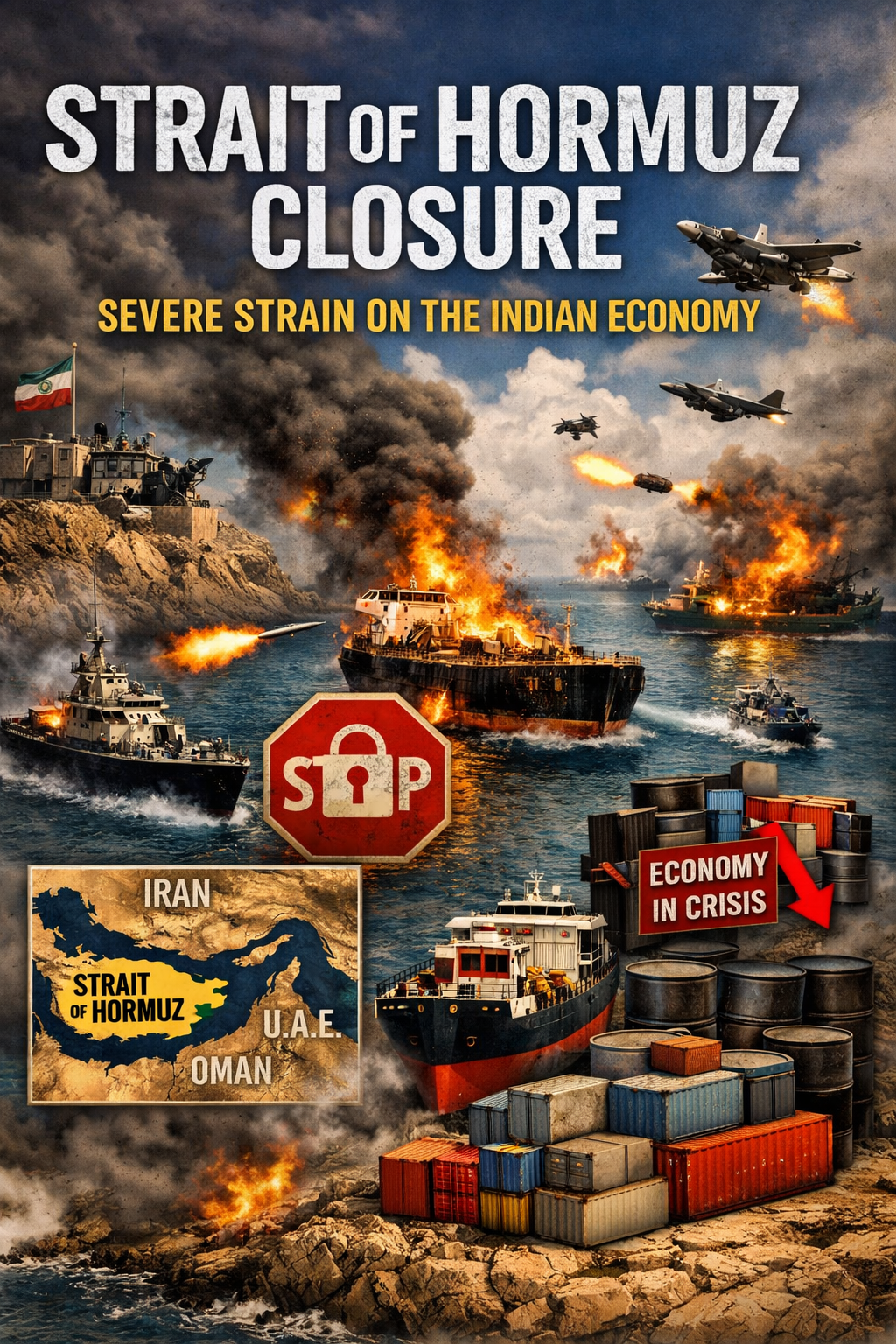
The closure of the Strait of Hormuz—a vital chokepoint carrying roughly 20% of global seaborne oil and significant LNG shipments—has triggered one of the largest energy supply shocks in recent history. Globally, Brent crude has traded in the $100–$140 per barrel range, with analysts warning of possible spikes toward $200 in a prolonged crisis. For India, the world’s third-largest crude oil importer, the impact is particularly sharp.
India imports 85–90% of its crude oil needs (approximately 5–5.5 million barrels per day). Before the crisis, over 40% of these imports, along with substantial LPG and LNG volumes, passed through the Strait. While India has rapidly diversified supplies, the disruption continues to exert pressure on foreign exchange, inflation, fiscal balances, and household budgets.
Macroeconomic Pressures
Oil marketing companies (IOCL, BPCL, HPCL) are facing daily under-recoveries of around ₹1,000 crore as they absorb losses to limit retail price increases. This has strained the fiscal deficit despite government excise duty cuts.
Rupee and Forex Strain: Elevated oil import bills combined with foreign investor outflows have pushed the Indian Rupee to test ₹95–97 levels. The Reserve Bank of India (RBI) has intervened aggressively through pre-market dollar sales ($2–3 billion daily), liquidity swaps (e.g., $5 billion auctions injecting over ₹42,000 crore), bank position limits, and curbs on speculative offshore trading. These actions have helped stabilise the currency while tightening domestic liquidity.
Diversification and Sectoral Impacts: India has raised non-Hormuz crude sourcing to ~70% (from 55% pre-crisis), turning more to Russia, the US, West Africa, and Latin America. However, longer shipping routes have raised freight costs. Shortages of petrochemical feedstocks (propane, butane, sulphur) have disrupted pharmaceuticals (impacting ~$2 billion in exports), manufacturing, and other sectors. Fertiliser and sulphur disruptions also threaten the Kharif season, raising risks of food inflation.
LPG Supply Challenges: With nearly 60% of LPG historically sourced from the Gulf, the government has rolled out emergency measures including spot imports from the US, a 10% increase in domestic refinery output, priority allocation to households, a freeze on new connections, and voluntary surrender schemes for urban PNG users. Limited naval-escorted Indian vessels provide a restricted supply line through the Strait. Remittances from over 9 million Indian workers in the Gulf have also slowed, particularly affecting states like Kerala.
Present Crude Storage in India: Strategic Petroleum Reserves and Total Inventories
India’s Strategic Petroleum Reserves (SPR), managed by the Indian Strategic Petroleum Reserves Limited (ISPRL), serve as the core emergency buffer. The current operational capacity is 5.33 million metric tonnes (MMT) — equivalent to approximately 37 million barrels — stored in underground rock caverns at:
Visakhapatnam (Andhra Pradesh): 1.33 MMT
Mangaluru (Karnataka): 1.5 MMT
Padur (Udupi, Karnataka): 2.5 MMT (largest site)
As of mid-May 2026, the SPR is approximately 64% filled (~3.37 MMT), offering roughly 5 days of India’s crude demand on its own. At full capacity, it would provide ~9.5 days of cover.
When combined with commercial and refinery stocks held by oil companies, India’s total national oil inventories currently stand at around 60–74 days of cover under normal conditions. However, the Hormuz disruption has led to a ~15% drawdown in overall crude inventories. Oil marketing companies have confirmed adequate supplies with approximately 60 days of fuel reserves (petrol, diesel, and LPG) in the broader system. The government has drawn down reserves cautiously, supplemented by diversification and diplomatic arrangements (such as storage tie-ups with ADNOC).
Phase II expansion (adding ~6.5 MMT at sites including Chandikhole in Odisha) aims to increase strategic cover to ~22 days once completed, though progress has seen delays.
This storage infrastructure has been crucial in preventing immediate shortages, but experts note that a closure lasting several more months could accelerate depletion and heighten fiscal and inflationary pressures.
Impact on Citizens
Despite partial price shielding, cost-push inflation is rising through higher transportation and input costs, affecting essentials, food, and services. LPG availability remains a concern for many households, especially in rural and semi-urban areas. The government has appealed for fuel conservation amid the strain on inventories.
Likely Fuel Price Rise and Outlook by End of May 2026
Retail petrol and diesel prices have already seen multiple phased hikes in May 2026 after a long freeze. Cumulative increases have reached around ₹4.5–5 per litre so far, with recent adjustments including a ₹3/litre hike around mid-May followed by smaller increases of ~₹0.87–0.91/litre. In Delhi, petrol currently stands near ₹99.51 per litre and diesel around ₹92.49 per litre (prices vary across states due to local taxes, with higher levels in cities like Mumbai and Kolkata).
Prediction by end of May 2026: With Brent crude remaining elevated ($100–120+ range) amid ongoing uncertainty, further modest hikes of ₹1–3 per litre are likely before the month ends. Analysts suggest that total increases could reach ₹8–10 per litre (or higher in worst-case scenarios up to ₹25+ over a longer period) to help offset mounting under-recoveries. However, the government is expected to maintain a calibrated, phased approach with continued subsidies to moderate inflationary impact and political sensitivity. Full pass-through of global prices remains unlikely in the immediate term.
Overall Outlook
The Hormuz crisis exposes India’s energy import vulnerabilities but also demonstrates its adaptive capacity through supply diversification, SPR utilisation, RBI interventions, and diplomatic efforts. Long-term resilience requires faster SPR expansion, increased domestic production, and accelerated renewables adoption.
While global spillovers risk recession and broad inflation, India’s relatively domestic-oriented economy and proactive policy responses should help it navigate the challenges—though at the cost of higher prices and economic pressures for citizens and businesses in the near term. Regular updates from the Ministry of Petroleum and Natural Gas will remain essential.
*Research by Nanditha Subhadra
