

Reimagining Public Procurement: Primus Report Highlights Massive ₹88,000 Cr Opportunity for Indian Startups

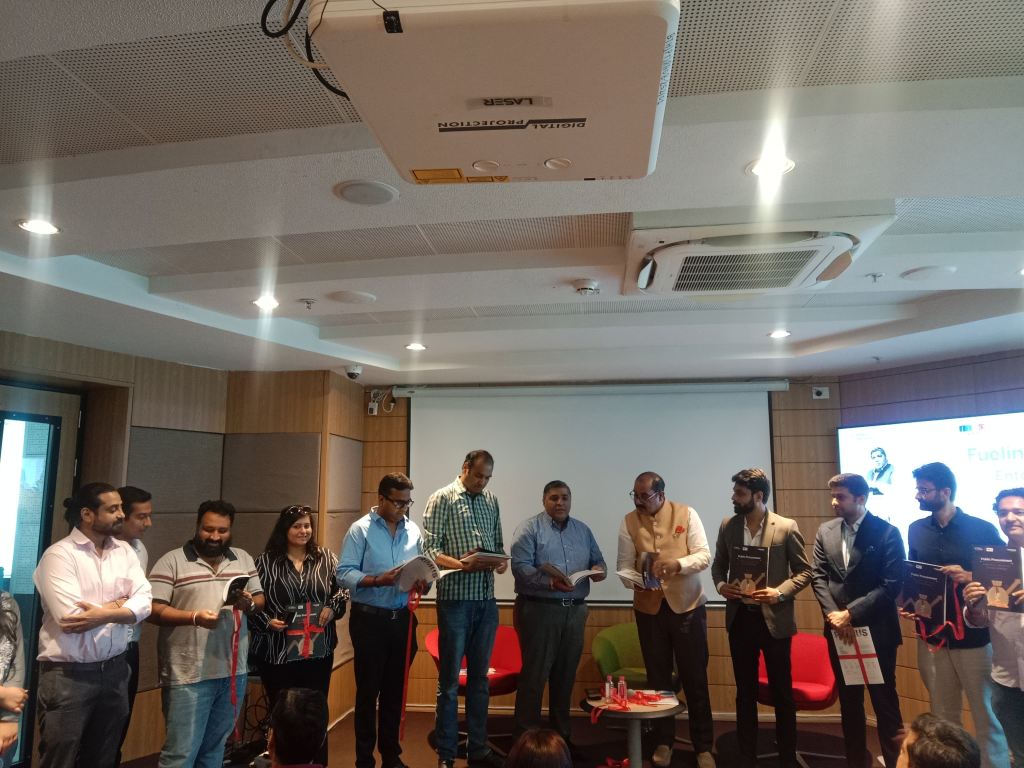
Bengaluru: As India pushes toward its $5 trillion economic vision, a new thought leadership report by Primus Partners, in collaboration with JITO Jaipur, underscores the untapped potential of public procurement as a catalyst for startup growth. Titled “Public Procurement: A ₹88,000 Crore Opportunity for India’s Startups,” the report was launched at a high-impact startup event held at Bhamashah TechnoHub, Jaipur. The highlight of the event was a compelling discussion on ‘Fueling Future Enterprises: Public Procurement as a Platform for Innovation’, featuring leading voices from policy, business, and entrepreneurship.
This report is positioned as a reference point for policymakers, ecosystem builders, and entrepreneurs, offering a blueprint to unlock the full potential of public procurement in accelerating India’s startup journey. It highlights how India’s ₹88 lakh crore annual procurement spend, historically seen through a bureaucratic lens, can be reimagined as a strategic lever to unlock market access, boost revenues, create jobs, and build credibility for startups across diverse sectors and geographies.
India is now home to over 180,000 DPIIT-recognized startups, contributing $140 billion to GDP and generating millions of jobs. Yet for most early-stage ventures, the biggest hurdle is not funding or innovation—but access. Many struggle to secure their first significant customer, especially in high-friction, credibility-sensitive sectors like education, health, agriculture, and infrastructure. Public procurement—accounting for nearly 25% of India’s GDP—has the potential to be the bridge between innovation and impact.
The report argues that even a 0.01% allocation of the procurement budget toward startups—₹888 crore—could empower hundreds of ventures. A 1% allocation could potentially transform India’s economic landscape.
“The core needs of startups are market access and funding. They need customers, credibility, and a pathway to scale,” said Mr. M. Ramakrishnan, Managing Director, Primus Partners. “Even a 0.1% allocation of public demand can unlock access, stability, and investor confidence—especially for ventures outside Tier 1 cities. A fractional shift in buying power can turn unmet needs into engines of jobs, innovation, and economic resilience.”
The report highlights Rajasthan’s pioneering model, which is already rewriting the procurement playbook. Through initiatives like iStart and the e-Bazaar platform, the state has enabled direct purchases from startups, eliminated legacy eligibility barriers such as prior turnover or experience, and awarded over ₹22 crore in government work orders to local ventures.
A panel discussion featuring Mr. Ravi Nandan Sinha (Director, MSME Business Forum India) talked about the vast and growing canvas of opportunity in government procurement. With 25% of procurement value mandatorily reserved for MSMEs, startups must recognize the potential and prepare strategically. These subject needs far more awareness – many are unaware of just how accessible and rewarding this space can be. Startups must do their homework, understand the process, and assign a dedicated resource to manage government business as a vertical. Once you enter and successfully deliver on a government work order, you become the tiger of the jungle – the opportunities multiply, and the money keeps flowing also how business model is one of the major segments in a startup. He also suggested that always go with the flow and always get your country benefited at last and Mr. Amit Purohit (Vice President, Primus Partners) explored how procurement can become a vehicle for innovation and inclusive enterprise growth. For many startups and MSMEs, government procurement feels like an unclear and intimidating process. There’s a common belief that a single model exists for success, but in truth, each entrepreneur’s path is unique. To bring structure and tranforrence, the Rajasthan government has amended its procurement act—allowing startups to register, undergo QRate evaluation, and qualify for work orders based on their rating. This move helps standardize access and levels the playing field for emerging businesses
The results have been striking: some startups saw revenue growth as high as 3,500%, average growth hovered around 50%, and over 88% expanded their teams—many doubling or tripling headcount within a year.
