

From Royal Hunting Grounds to a World-Famous Tiger Reserve Bandhavgarh’s Remarkable Conservation Journey

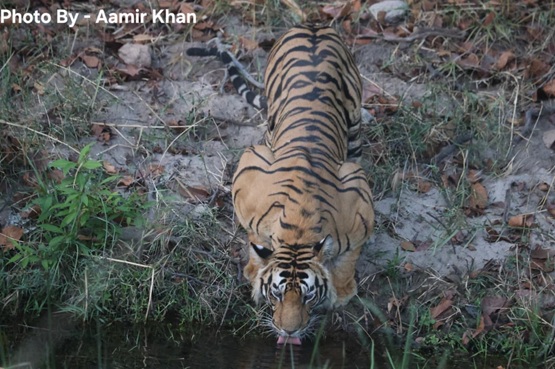
Where the echoing roar of the jungle today stands as a symbol of successful wildlife conservation and ecological balance.
• By Journalist Syed Asim Ali
Bandhavgarh Tiger Reserve, one of India’s most renowned tiger reserves, is now famous not only for its tigers but also for its rich biodiversity, historical heritage, and successful wildlife conservation efforts. Filled with dense forests, ancient hills, rare wildlife, and natural water sources, Bandhavgarh has become a favorite destination for nature lovers and wildlife photographers from around the world.
From Royal Hunting Grounds to a Protected Reserve
The forests of Bandhavgarh were once the private hunting grounds of the Maharajas of Rewa. Royal hunting expeditions were frequently organized here. This land also gave the world the famous white tiger “Mohan,” discovered in 1951 by Maharaja Martand Singh of Rewa. Mohan is considered the ancestor of all white tigers in the world.
Over time, excessive hunting and human interference caused a rapid decline in wildlife populations. In response, the forest department and government took major conservation initiatives. The area was first declared a national park and later officially designated as a tiger reserve in 1993.
Today, due to continuous monitoring, patrolling, and scientific management by the forest department, wildlife is thriving in a safe environment. Local communities are also actively participating in conservation efforts, making Bandhavgarh a successful model of wildlife protection.
12 Ancient Ponds Spread Across 582 Acres: Bandhavgarh’s Unique Natural Heritage
Bandhavgarh is known not only for its tigers but also for its historical and natural treasures. The reserve is home to 12 ancient ponds spread across nearly 582 acres, which are still considered the lifeline of the forest. It is believed these ponds were created in ancient times for water conservation and to support wildlife.
Even today, these ponds play a crucial role in maintaining ecological balance. During summers, when many smaller water sources dry up, these ponds become vital water sources for tigers, leopards, sambars, spotted deer, wild boars, and numerous bird species. Wildlife activity around these ponds makes them a major attraction during safaris.
Surrounded by dense sal and teak forests, these ponds enhance the beauty of Bandhavgarh. The hills, ancient caves, inscriptions, and historical ruins here reflect the glorious history of the region.
This unique blend of nature, history, and wildlife makes Bandhavgarh one of India’s most special tiger reserves. Every visitor is left mesmerized by its ancient ponds and breathtaking landscapes.
The Successful Return of Gaurs to Bandhavgarh
The return of gaurs to Bandhavgarh is considered one of India’s most successful wildlife restoration projects. At one point, excessive hunting and habitat changes had nearly wiped out the species from the region, affecting the forest’s ecological balance.
Recognizing the situation, the Madhya Pradesh Forest Department launched a gaur reintroduction project in 2012. Gaurs were gradually relocated from Kanha Tiger Reserve and later from Satpura Tiger Reserve to Bandhavgarh. In 2026, under the third phase of the project, 27 gaurs were successfully translocated to strengthen genetic diversity.
The forest department developed safe grasslands, water sources, and a favorable habitat for them. Gradually, the gaurs adapted to the forest and their population began increasing.
Currently, the gaur population in Bandhavgarh has reached around 160, with many roaming freely in the wild. Experts believe their return has significantly strengthened the forest’s ecological balance and biodiversity.
Asian Elephants Are Transforming Bandhavgarh’s Forests
Bandhavgarh Tiger Reserve has long been known as the land of tigers, but in recent years the increasing presence of Asian wild elephants has brought major ecological changes. Since 2017–18, elephant herds from the forests of Odisha and Chhattisgarh have naturally migrated into Bandhavgarh. Remarkably, no translocation program was involved; the elephants chose the region as their new habitat on their own.
According to the forest department, nearly 80 to 90 wild elephants are currently present in and around Bandhavgarh. Experts say elephants play a key role in strengthening ecological balance. They create natural pathways and grasslands, benefiting herbivores such as deer, sambars, spotted deer, and Barasingha. They also help in seed dispersal, accelerating natural forest regeneration.
The forest department is continuously monitoring elephant movement and taking steps to reduce human-wildlife conflict. Experts believe that in the coming years, Bandhavgarh may emerge as an important habitat for Asian elephants alongside its identity as a tiger reserve.
Barasingha Conservation Area in Magadhi Range: A Story of Revival
The approximately 75-hectare barasingha conservation enclosure developed in the Magadhi Range of Bandhavgarh is an important wildlife conservation initiative. The enclosure has been specially created for the protection, breeding, and growth of the endangered barasingha species.
Once found in large numbers across Central India, barasingha populations declined rapidly due to hunting, habitat loss, and environmental changes. To address this, the forest department developed this special conservation zone in Magadhi Range, where grasslands and water sources are ideal for the species.
Natural grasslands, water bodies, and safe breeding zones have been developed within the enclosure. Regular monitoring and scientific management are helping strengthen conservation efforts.
Positive results are already visible, with barasingha populations increasing and their behavior becoming more natural. The initiative proves that endangered species can recover with proper planning and conservation.
Today, this conservation area has become a new identity of Bandhavgarh Tiger Reserve and an inspiration for other wildlife sanctuaries.
The Roar of Bandhavgarh: 9 Tigers Sighted in a Single Safari
The Tala Zone of Bandhavgarh has always been famous for thrilling tiger sightings and safari experiences. However, spotting nine tigers during a single safari was considered an extraordinary and historic event. Seeing multiple tigers at different locations in the calm forest created immense excitement among tourists and wildlife enthusiasts.
According to the forest department, spotting even one or two tigers during a safari is considered special, but seeing nine tigers together reflects Bandhavgarh’s rich biodiversity, protected habitat, and successful conservation efforts. This is one of the reasons why Bandhavgarh is often called the “Fortress of Tigers.”
Previous estimates recorded nearly 220 tigers in Bandhavgarh Tiger Reserve, a major achievement in wildlife conservation. Experts believe that with better habitat protection, sufficient prey base, and continuous monitoring, tiger numbers may increase further in future counts.
Bajrang: The Most Famous Tiger of Bandhavgarh
Whenever Bandhavgarh is mentioned, one tiger that immediately comes to mind is the famous tiger “Bajrang.” With his massive build, powerful walk, and commanding presence, Bajrang became more than just a tiger — he became the identity of Bandhavgarh itself. Wildlife lovers and photographers from across the world recognize him instantly.
People often say that any story about Bandhavgarh feels incomplete without mentioning Bajrang. Tourists would wait for hours on safari routes hoping to catch a glimpse of him. His mere presence added unmatched excitement to the jungle experience.
Bajrang not only attracted tourists but also played a significant role in giving Bandhavgarh international recognition. His popularity symbolizes why Bandhavgarh remains one of India’s richest and most thrilling tiger reserves.
“Pujari”: The Tiger Who Became an Emotion
The death of Bandhavgarh’s famous male tiger “Pujari” deeply saddened wildlife lovers. He died after a territorial fight with the D-1 tiger, leaving tourists, local residents, and forest staff emotional.
Pujari was extremely popular among wildlife photographers and tourists. He was often seen posing magnificently in front of cameras. Locals named him “Pujari” because he was frequently spotted in the morning in a posture that appeared as if he were offering prayers to the rising sun.
Following his death, social media was flooded with emotional tributes. Wildlife enthusiasts, photographers, and tourists shared memorable safari moments and photographs, describing him as one of Bandhavgarh’s most iconic and beloved tigers.
The overwhelming emotional response proved that Pujari was not just a tiger, but a living symbol deeply connected to people’s emotions. The tributes highlighted the strong emotional bond that has developed between humans and wildlife in Bandhavgarh.
A Living Example of Conservation and Nature
Today, Bandhavgarh Tiger Reserve stands not just as a tiger reserve, but as a living example of successful wildlife conservation, rich biodiversity, and harmony between humans and nature. The combined efforts of the forest department, local communities, and conservation experts have given Bandhavgarh a new global identity.
The roaring tigers, moving elephant herds, massive gaur groups, and ancient ponds nestled among forested hills continue to send a powerful message: when conservation efforts are sincere and continuous, nature has the ability to restore itself. Strong coordination and communication between villagers and the forest department remain one of the greatest strengths of wildlife conservation in Bandhavgarh, helping maintain balance between forests, wildlife, and human life.
